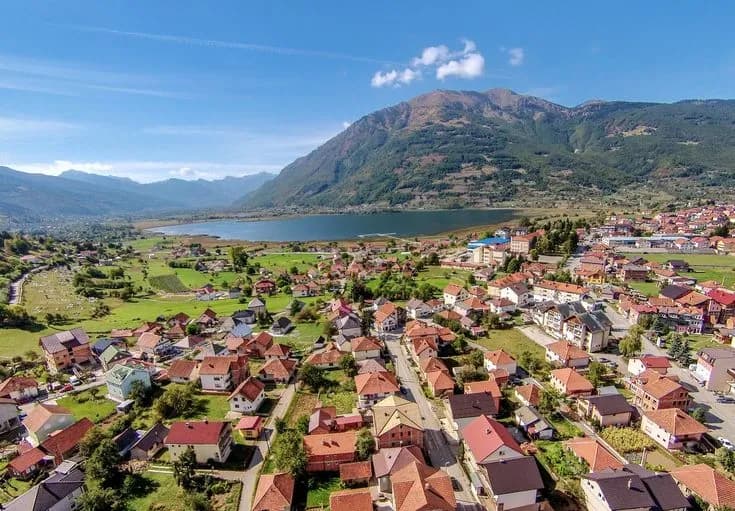
The monuments of the municipality of Plav represent a valuable testimony of its rich history, cultural heritage and identity of the local population. Although their number is not large, each of them carries a special story about the people, events and historical circumstances that shaped this region. The memory of notable personalities, war victims, anti-fascist struggle and important periods of the past that left a deep mark on the life of Plav and its surroundings has been preserved through memorial markers. Located between Lake Plav and the magnificent massif of Prokletije, Plav has been a meeting place of different cultures, religions and traditions for centuries. Its position on important historical roads made this area the site of numerous political and military events — from the Ottoman period, through the Balkan Wars, to major turning points during the 20th century. That is why the monumental heritage of Plav is extremely important, because it preserves the memory of events and personalities that marked the development of the entire region.
Memorial bust of Husein Pasha Redžepagić In the very core of Plav there is a memorial bust dedicated to Husein Pasha Redžepagić, one of the most significant historical figures of the Plav region from the Ottoman period. Husein Pasha was remembered as a key figure for the urban and social development of the settlement, and his name is inextricably linked to the famous Redžepagić Tower — the oldest preserved residential and defensive building in the city. This bust represents an important monument of the cultural and historical continuity of Plav and is a tribute to the tradition and architectural heritage that shaped the vision of this area. Monument to the fighters of the National Liberation War One of the central memorials in Plav is a monument dedicated to the fighters of the National Liberation War (NOR) and victims of fascism from the period 1941-1945. year. Erected after the end of the Second World War, this monument is a permanent sign of memory of the inhabitants of Plav and the surrounding villages who participated in the anti-fascist struggle or lost their lives during the war years. During the Second World War, the Plav area was under Italian occupation, and after the capitulation of Italy in September 1943, it was under German military administration. The population of this region was exposed to great war hardships, repression and suffering, while many locals actively participated in the units of the People's Liberation Army of Yugoslavia. After the liberation in 1945, memorial markers were erected throughout the country at that time, including in Plav, in order to preserve the memory of fallen fighters and civilian victims. Today, this monument is a central gathering place for the celebration of significant anti-fascist dates and reminds us of a difficult period in history when freedom and peace were paid for with great sacrifices. Memorial to the victims of 1912–1913. year One of the more recent memorials in Plav is located in the Sultanija mosque complex and is dedicated to the victims of the tragic events of 1912 and 1913. The memorial was erected in 2020, according to the author's project of architect Armin Redžepagić. This feature refers to the suffering of the Muslim population of Plav and Gusinje during and after the First Balkan War (1912–1913), in a period of great political and territorial changes in the Balkans. Historical sources and national memory record that in that period, serious crimes against the civilian population were committed in this area, including mass killings and violent conversions. The monument has an extremely important role in the culture of memory, because it preserves the memory of the innocent victims and sends a strong message about the need to foster peace, tolerance and mutual respect among the communities that have shared this space for centuries. Memorial on the Chakor mountain pass The strategically extremely important mountain pass Čakor, which connects the Plav parish with Metohija, was the scene of fierce battles and great suffering during the Balkan Wars, the First and Second World Wars. The memorial on Čakor is dedicated to the fighters and guards who defended these border positions, as well as the local residents and soldiers who died in the whirlwinds of war that ravaged this part of Montenegro. Located on a high pass, this monument also has a strong symbolic value — it stands as a silent witness to historical crossroads and the difficult fate of border areas. Memorial plaques and local memorial signs in Plav settlements In the area of the municipality of Plav, there are several memorial plaques dedicated to the participants of the National Liberation War, as well as to the victims of war suffering in the 20th century. These signs were placed in various locations — next to public facilities, schools and in the centers of settlements such as Murino, Velika, Brezojevice and other Plav villages. Their purpose is to preserve the memory of the people from the Plav area who contributed to the fight against the occupiers or died innocently. Of particular importance are the memorials dedicated to the innocent civilians and victims of war terror in the villages below Chakor and Visitor. Although of modest dimensions, these features preserve family and native stories that form an integral part of the overall history of Plav. Today, they also have an important educational role, because they bring the past of the homeland closer to the younger generations and remind them of the importance of preserving historical memory. Conclusion The monumental heritage of the municipality of Plav represents an indispensable part of the cultural and historical heritage of this region. From the memorial bust of Husein Pasha Redžepagić, through the central anti-fascist monument and the memorial near the Sultanija Mosque, to the monument on Čakor and memorial plaques in the villages, each location carries a precious part of the historical story. The value of these monuments is not only in their architectural form, but above all in the stories they keep from being forgotten. They represent meeting places of past and present, reminding visitors of the complex history of Plav and the rich multicultural character of this area. Together with the natural jewels — Lake Plav, the peaks of Prokletije, the Redžepagić Tower and a rich cultural tradition — the monuments of the municipality of Plav form an important segment of the tourist offer and contribute to a more complete understanding of the history and identity of this unique part of Montenegro.