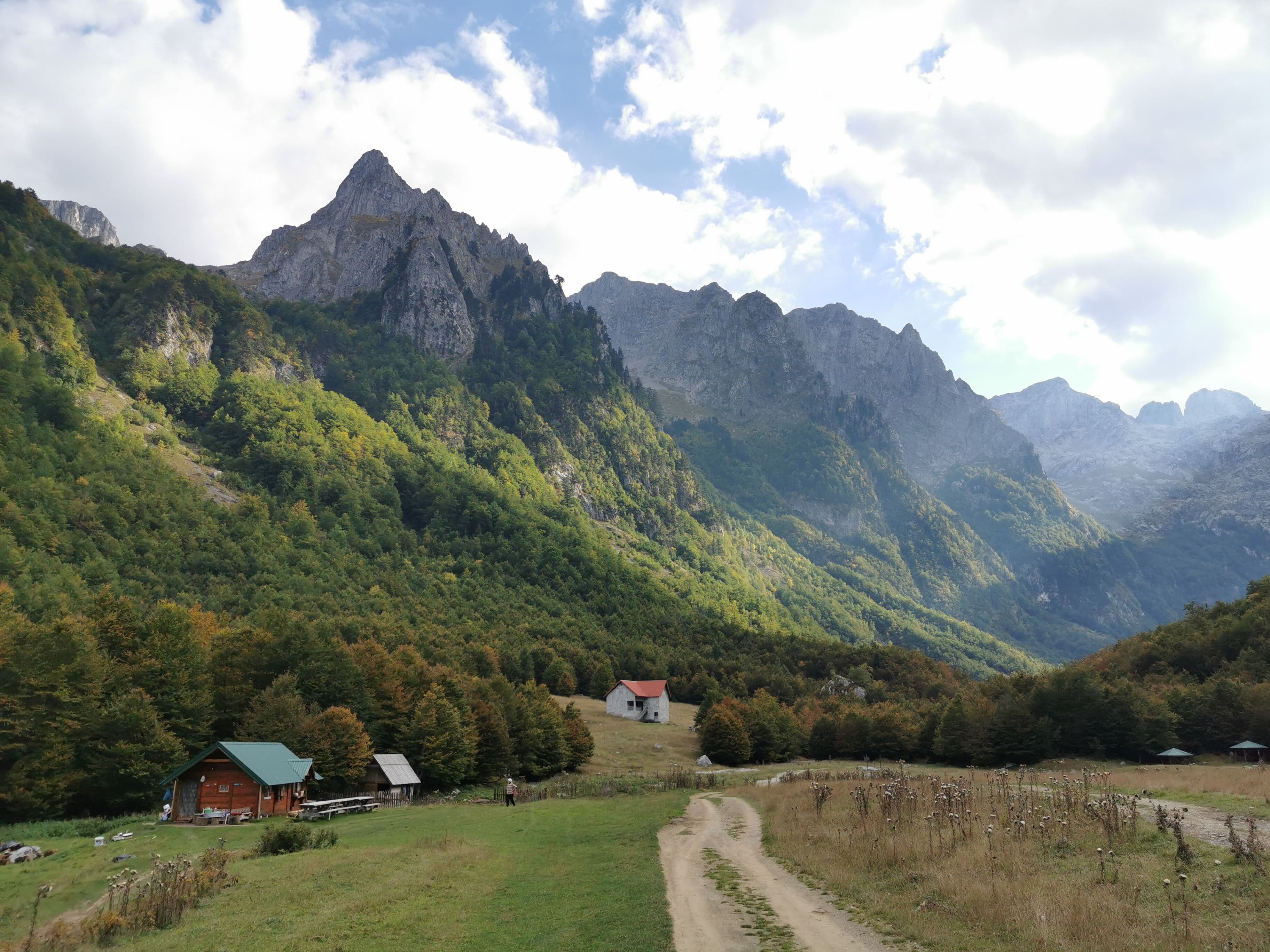
This national park was officially declared in 2009, making it the fifth and at the same time the youngest area of its kind under state protection in Montenegro, and covers a total area of about 16,600 hectares. It encompasses a magnificent and untamed mountain range which, due to its sharp shapes and inaccessibility, bears the recognizable epithet "The Alps of Southern Europe". It is one of the last truly preserved and wild mountain ranges in the Balkans.
Its relief is characterized by steep limestone rocks and deep cuts, which have been shaped for centuries by the displacement of the soil and the melting of former glaciers. It is in this area that Zla Kolata is located, which with 2,534 meters above sea level holds the title of the highest mountain peak in the country. The opposite of the sharp rocks are the beautiful and spacious glacial valleys of Grebaja and Ropojane, which attract mountaineers and explorers from all over the world with their beauty. In addition to the mighty mountains, this area in the municipalities of Plav and Gusinje is extremely rich in water – numerous springs, rivers and clean lakes. Lake Plavsko stands out in particular, as well as the mystical Lake Hrid, which lies hidden in a coniferous forest at almost 2,000 meters high. There are many legends associated with Lake Hrid, among which the most famous is that it was created by fairies and that swimming in it brings happiness and health. Also, an unavoidable part of this area are the famous Alipaša's springs in Gusinje, where water in large quantities springs directly from the ground. Due to its specific climate and geographical isolation, Prokletije is the true center of Balkan biodiversity. Over 1,700 plant species grow here, which represents more than half of the total flora of Montenegro, including rare forests of pine and pine. The animal world is equally rich and stable, so these forests and inaccessible rocks provide shelter for large mammals such as bears, wolves and chamois, but also for the rare Balkan lynx, while the golden eagle nests at the heights. Finally, a special stamp on the whole area is given by the local population and the traditional way of life on high katuns, where nomadic cattle breeding is still practiced today. The cultural and historical heritage of this region has been shaped by centuries of interweaving of various influences, which is best seen through the authentic architecture of old stone towers and wooden houses, rich folk costumes and recognizable hospitality. Staying here provides a unique opportunity to return to tradition and enjoy the authentic local specialties of this region.