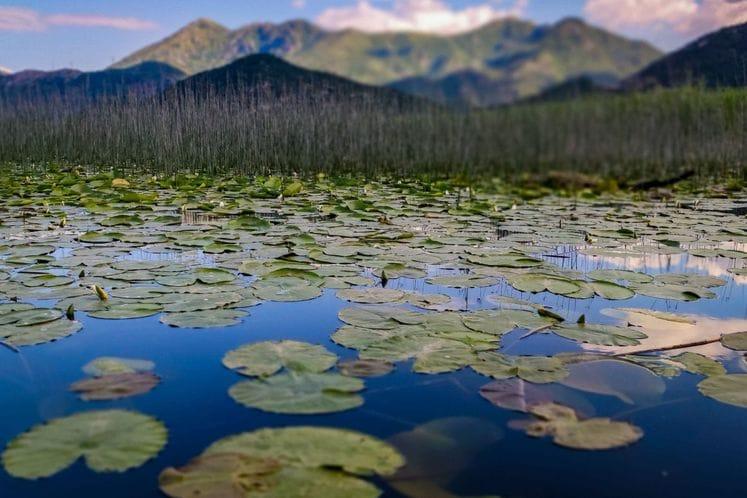
Lake Skadar is a place where the boundaries between water, sky and karst blur, creating a living mosaic of priceless beauty. As the largest lake in the Balkans, it is home to hundreds of birds and a kingdom of water lilies that cover its surface like a luxurious green carpet in the warm months. I
This national park includes the Montenegrin part of the largest lake on the entire Balkan peninsula, and its specificity is that it extends territorially through as many as three Montenegrin municipalities: Bar, Podgorica and Cetinje. Due to its enormous ecological and natural importance, this common area of three municipalities received the status of a national park in 1983, while in 1995 it was included in the Ramsar list of wetlands of international importance. The surface of the lake is extremely dynamic and constantly varies depending on the water level, from 370 to 540 square kilometers. This has created a beautiful and sensitive aquatic ecosystem in which clear, open blue water, endless fields of white and yellow water lilies, dense reeds and flood forests of willow and black alder alternate.
In global ecological circles, Lake Skadar is best known as a true bird's paradise and one of the largest ornithological reserves in Europe. It is the home, wintering place or main station during migration for as many as 281 species of birds. Among them, the absolute star and recognizable symbol of this park is the curly pelican, a rare and magnificent bird that successfully nests here. In addition to birds, the lake also hides an interesting natural phenomenon known as the "eye" - these are deep underground springs at the very bottom of the lake through which cold and clean water from the surrounding mountains flows under pressure. Thanks to the warm water and the abundance of food, more than 40 species of fish live in the lake, many of which are endemic. For the local population and their traditions in the areas of all three mentioned municipalities, the most important Skadar carp and small flounder have been for centuries, the hunting and traditional drying of which is the basis of the local way of life and gastronomy.
In addition to untouched nature, this border area also hides an incredibly rich history. Traces of old civilizations and a stormy past intertwine on the coasts and islands. There are picturesque old fishing settlements with stone architecture, such as Virpazar in the Crmnica region and Rijeka Crnojevića, but also historical forts such as Žabljak Crnojevića, Lesendro and the famous Grmožur island prison. A chain of medieval monasteries from the era of Balšić and Crnojević, located on lonely lake islands (gorica) such as Starčevo, Beška and Moračnik, has a special spiritual and cultural value. This mystical series of shrines is popularly known as "Zetska Sveta Gora" and perfectly depicts the age-old combination of wild nature and human spirituality in this triple municipal area.