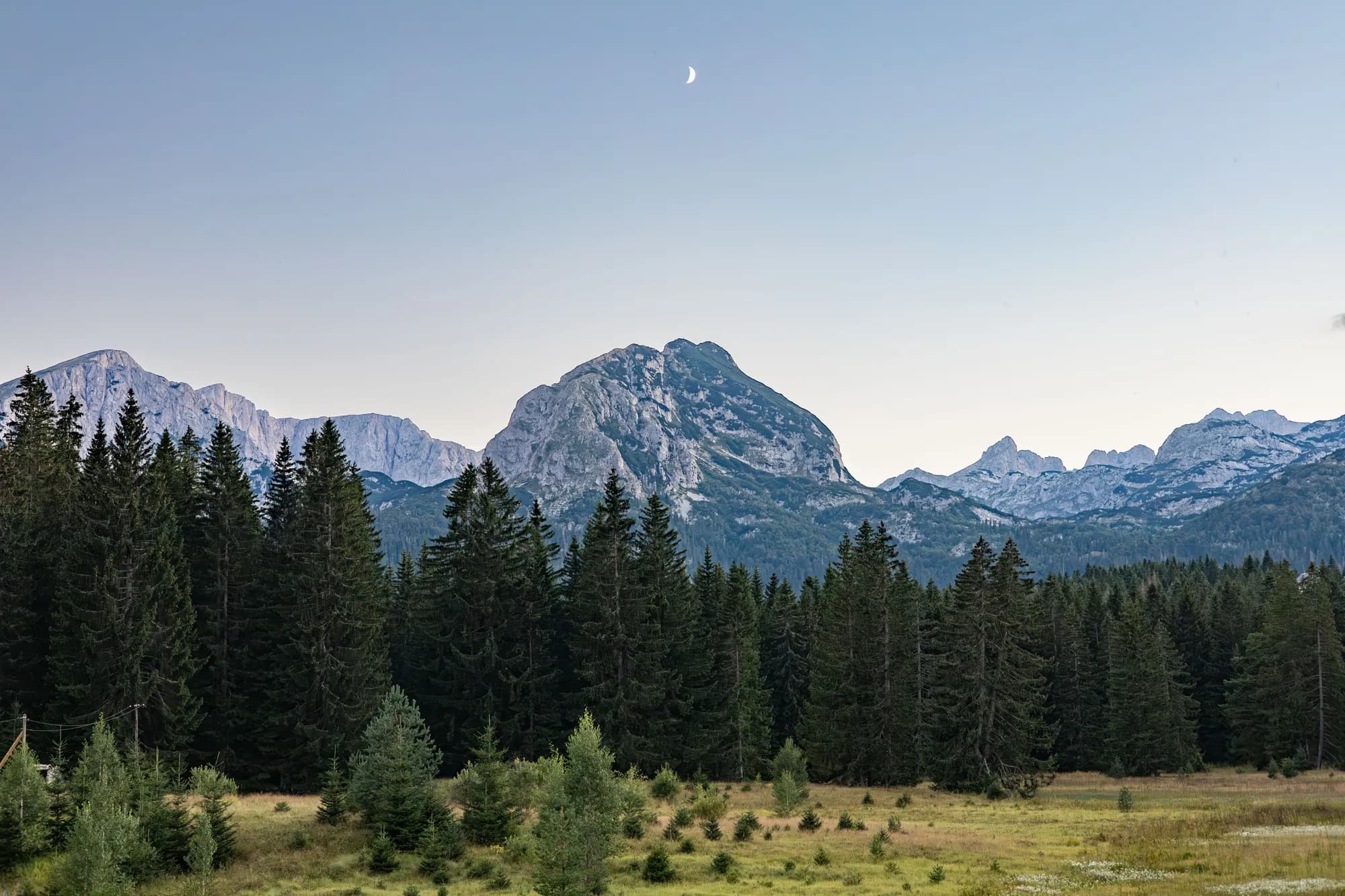
Located in the northwest of Montenegro, this magnificent mountain massif is a true geomorphological phenomenon. Due to its priceless beauty and exceptional ecological significance, it received the status of a national park in 1952, while global recognition came in 1980, when UNESCO included it on the list of World Natural and Cultural Heritage. Its vast territory of over 32,000 hectares administratively extends through as many as five Montenegrin municipalities: Žabljak, Plužine, Savnik, Pljevlja and Mojkovac
This monumental area is characterized by rugged mountain areas with over forty sharp peaks that exceed 2,000 meters above sea level, among which Bobotov Kuk dominates with its massiveness with a height of 2,523 meters. A special and widely recognizable decoration of this massif are eighteen glacial lakes, which are picturesquely called "mountain eyes" due to their clarity and deep blue-green color. Among them, the most visually attractive and most visited is the Black Lake. It is located in the immediate vicinity of Žabljak, which holds the title of the highest urban settlement in the Balkans and serves as the main tourist and administrative center of this region. In addition to the imposing peaks, the spectacular canyon of the Tara River, over 80 kilometers long, is also under the strict protection of the park. With a depth that in some places reaches as much as 1,300 meters, this magnificent cut is the deepest canyon in Europe, while Tara itself is known worldwide as the "Tear of Europe" due to its incredible purity and drinkability. Pronounced altitude differences and specific climate have created perfect conditions for the development of extremely rich flora and fauna, making this area one of the most important centers of endemism in the Balkans. Within the boundaries of the park, on the territory of the municipality of Mojkovac, the rainforest reserve Crna poda stands out, recognizable by its monumental black pine trees that reach a height of over 50 meters and an age of several centuries. Dense forests provide a safe haven for large wildlife such as brown bears, wolves, roe deer and chamois that inhabit the highest cliffs, while clean mountain rivers and lakes abound in brown trout. In addition to priceless nature, this area that connects Žabljak, Plužine, Šavnik, Pljevlja and Mojkovac also preserves an incredibly rich cultural heritage. The centuries-old life on this rugged mountain is evidenced by prehistoric tumuli, the remains of Roman fortifications, as well as unique medieval necropolises with tombstones at the sites of the Greek Cemetery and Bare Žugić, which are also under the protection of UNESCO. The traditional way of life of the highlanders is still visible today through the authentic architecture of wooden houses covered with shingles and seasonal cattle kennels on the Durmitor plateau. A stay here provides an opportunity to enjoy famous specialties such as Durmitor cheese, prosciutto and lamb under the bell, while the overall experience is perfectly rounded off by mystical folk legends about fairies and winged horses that the locals still proudly keep from oblivion.