Now we move on to the third geographical and historical unit in our series — the sacral heritage of Žabljak and the Durmitor region. Your text is excellently conceived because it recognizes the essential connection between the harsh mountain nature, historical refuges and the erection of shrines at incredible altitudes. I did a detailed proofreading (corrected typos such as "vjeski" and "Durmitoski", fixed punctuation, standardized the names of temples and removed repetitions of phrases). Also, I professionally upgraded the text with the historical context — I clarified the connection between the temple and the origin of Zabljak itself, the role of Dobrilovina as "Mala Morača" and its wooden bell tower, and added geographical weight to the stories about the churches in the Tara canyon and isolated Mala Montenegro. Here is a consolidated, stylistically uniform and professionally expanded version of the text:
SACRAL HERITAGE OF THE DURMITOR REGION: Sanctuaries among mountain peaks and canyons The mountain massif of Durmitor and the area of the municipality of Žabljak abound not only in untouched natural beauty, glacial lakes and imposing peaks, but also in extremely important sacral heritage. Religious buildings and monasteries of this region have functioned for centuries as spiritual sanctuaries, assemblies of Montenegrin tribes (especially Drobnjak and Šaranci) and guardians of literacy in harsh historical and climatic conditions. The architecture of these temples perfectly reflects the climate in which they were created — they are built of rough local stone, with steep roofs adapted to heavy snowfall, and are deeply integrated into the epic landscape of Durmitor and the canyon of the Tara River.
- The city center and the origin of Žabljak Cathedral of the Holy Transfiguration of the Lord Located in the very center of Zabljak, at the highest urban altitude in the Balkans (1,456 meters), the Cathedral Church of the Holy Transfiguration of the Lord is the most important sacral and historical building in the city. It was erected in 1862 to commemorate the great victory of the Durmitor tribes over the Ottoman army. During the turbulent wars in the 20th century, when Žabljak was repeatedly burned and destroyed to the ground, this church remained the only old building that escaped destruction. The historical significance of this temple is monumental because its construction directly initiated the establishment of the settlement of Žabljak itself. Before 1862, there were only temporary katun settlements in this area, but immediately after the construction of the temple, the first state school was opened in the immediate vicinity (in 1880), and soon after that the first craft and trade shops. In this way, Žabljak soon grew into the administrative and cultural center of the entire region. Architecturally, the church was built in the traditional style of mountain stone single-nave temples with a bell tower on a distaff. The Feast of the Transfiguration of the Lord (August 19) is also the official feast day of the municipality of Žabljak. Every year on this day, the city comes alive through a solemn liturgy and a traditional nationwide procession that passes through the city streets, gathering thousands of locals and tourists.
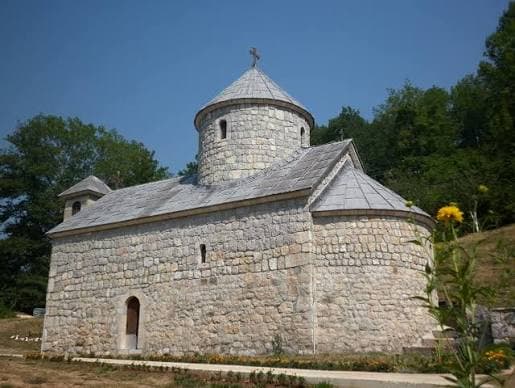
- Monastery in the Tara Canyon Monastery of St. Archangel Michael (Dobrilovina – "Mala Morača") The Monastery of St. Michael the Archangel is a medieval sanctuary and a protected cultural heritage of Montenegro. It is located on the road between Mojkovac and Žabljak, near the famous bridge on Đurđevića Tara, located on the picturesque left bank of the Tara River in the village of Donja Dobrilovina. Folk tradition firmly links the origin of the monastery to the ruling line of the Nemanjićs. Due to the obvious architectural similarity in proportions and style with the monastery of Moraca, it has been celebrated by the people since ancient times under the name "Mala Morača". During the Ottoman rule, the monastery was an educational center and a copying station, which is why it was repeatedly burned, ravaged and abandoned, but always rebuilt. The most striking visual and architectural detail of this complex is the unique, tall wooden bell tower that was placed next to the façade of the stone church at the end of the 19th century, perfectly illustrating the combination of stone and wood characteristic of Durmitor architecture.
- Churches of Durmitor villages and plateaus
Village churches dedicated to St. George (St. George) In the vicinity of Zabljak there are two churches dedicated to this saint-warrior, highly respected among the local cattle breeding tribes: Church of St. George in Žminica: This specific Orthodox place of worship is located in a picturesque rural setting near Lake Žminica. It is recognizable for its authentic appearance and wooden shingle roof, which makes it a rare example of a religious building that is completely visually and ecologically blended with the mountain ambience. Church of St. George in the village of Krš (Šaranci): Located about 21 kilometers away from the center of Zabljak, this village church is the historical center of the carp tribe and a reminder of the battles that took place in this area for the liberation and reunification of Montenegro. Church of St. Petka in Tepci – A sanctuary in the heart of the canyon Deep in the grandiose canyon of the Tara River, in the immediate vicinity of the village of Tepca, is the historic Church of St. Petka. From the very center of Zabljak, it is about 22 kilometers away from a steep, winding mountain road that descends into the abyss of the canyon. This church has enormous spiritual and emotional significance for the locals of this isolated part of Durmitor. As one of the few preserved sacral features at the very bottom of the canyon, it testifies to the deep rootedness of faith in the people who sought salvation from historical enemies in these inaccessible areas. Church of St. Nicholas in Novakovići – Between the tombstones and the lake In the village of Novakovići, at a distance of about 18 kilometers from the city center of Zabljak, there is the Church of St. Nicholas. This modest village church is located in the immediate vicinity of top natural and archaeological tourist attractions — Fish Lake and Devil's Lake. A special cultural and historical weight of this site is given by the proximity of medieval necropolises with tombstones (the so-called Greek cemetery), which are under the direct protection of UNESCO. The Church of St. Nicholas thus functions as a living continuation of the sacral continuity that has lasted on this plateau for more than half a millennium. Church of the Holy Saviour in Little Montenegro – Life on the Roof of the World The Church of the Holy Salvation (dedicated to the Ascension of the Lord) is located in the colorful, mythical and harsh village of Mala Crna Gora. The village is located on a high and isolated plateau (over 1,300 meters above sea level), wedged between the majestic and terrifying canyons of the Tara River and the Susica River, about 35 kilometers from Zabljak. Today's smaller church was built in 1889 right next to the village cemetery, right on the border between the Upper and Lower Villages. Due to the extreme altitude and harsh mountain winters, this village and its church are completely cut off from the rest of civilization during the snowy months (often from November to May). The Church of the Holy Salvation, built of massive hewn stone with a low vault and simple lines, is a superb and touching example of modest, but long-lived and defiant mountain architecture that defies time and natural elements. Conclusion The sacral heritage of Žabljak and Durmitor is a unique chronicle of survival. From the Cathedral Church that literally gave birth to the modern city, to the hidden Dobrilovina in the Tara Canyon, to the lonely village churches on the highlands and in the village of Mala Crna Gora — these buildings are historical monuments of the first category. They tell us about a people who carved their spirituality and freedom in the rough stone of Durmitor, leaving future generations with temples that amaze with their modesty and perfect harmony with the nature that surrounds them.