Located in the harsh and at the same time magnificent mountain environment of northeastern Montenegro, Rožaje is a space where geography, history and spirituality are inextricably fused. Proudly raised on the upper course and source of the Ibar River, at the foot of the monumental massif of Mount Haila, this city has functioned for centuries as an important strategic link and transit hub between Polimlje, Novi Pazar Sanjak and Kosovo. This specific geopolitical position has profoundly shaped its cultural landscape, leaving behind a layered spiritual heritage in which strong Ottoman-Islamic influences and centuries-old Orthodox traditions are intertwined. What makes Rožaje an urban and sociological phenomenon is the fact that sacral buildings here have never been seen as isolated historical exhibits. The mosques and churches of this area followed the natural pulse and expansion of the city, arranged to mark the key points of social life, family mahals and mountain villages. They form a living, functional spiritual map of Rožaje, testifying to the continuity of duration, identity tenacity and the deep rootedness of faith in the everyday life of the local people.
I. ISLAMIC SACRAL HERITAGE – Pillars of the bazaar and mahala
- Sultan Murad II Mosque – Historical Nucleus of the City The oldest, most important and central Islamic sacral building in Rožaje is the Sultan Murat II Mosque, which proudly stands in the city center. Its origin is related to the early period of Ottoman rule, more precisely to 1450, when, by order of Sultan Murad II, the first defensive and sacral structure in this area was erected, around which the urban core of today's city will develop in the following centuries. Architecturally and urbanistically, this mosque is a classic example of the Ottoman concept of city formation (šehera), where the central place of worship was also the administrative, spiritual and social center of the community. The Rožaje bazaar developed around its skirts, trade shops, craft workshops sprang up and the entire public life took place. Throughout history, it has been damaged several times in wars and fires, and it has been thoroughly reconstructed and expanded on two occasions – in 1854 and at the end of the twentieth century. The interior of the mosque is characterized by monumental simplicity, impeccable acoustics, a spacious prayer space and an elegant mihrab (prayer niche), and a slender stone minaret that dominates the panorama of Rožaj, making it a permanent guardian of historical memory.
- Kučanska Mosque – A Masterpiece of Traditional Wooden Architecture In the old, authentic part of the city, within the picturesque Kučanska mahala, there is the Kučanska Mosque – one of the most precious and best-preserved examples of traditional Islamic architecture in the entire Balkans. It was built in 1830, thanks to the funds of the local population of Kučanska mahala, at a time when the city was experiencing a strong demographic and economic rise. What makes this mosque extraordinarily valuable is its modest, organic architecture adapted to the harsh mountain conditions. It was built with a combination of indigenous materials – massive pine beams (logs) and adobe (unsewn clay mixed with straw), while its high, hipped roof is traditionally covered with shingles (wooden board). The interior of the mosque exudes the spirit of bygone centuries: wooden columns, a hand-carved minbar (pulpit) and mahfil (gallery) testify to the supreme craftsmanship of local master carpenters. Without modern architectural interventions, the Kučanska Mosque has remained an authentic monument of social history, which vividly shows how the Rožaje fraternal clans organized themselves and preserved their religious and cultural identity.
- The Ibrahim Mosque – A Contemporary Expression of Spiritual Continuity At the opposite pole from the old Mahal places of worship is the Ibrahim Mosque, which belongs to the newest layer of religious architecture in Rožaje. Built in 2004, this mosque was built due to intensive demographic growth and the expansion of the city towards new urban zones, reflecting the needs of modern times. Architecturally, the Ibrahim Mosque successfully combines elements of the neoclassical Islamic style with modern building solutions and materials. Its interior space is maximally functional, devoid of unnecessary historical decorations, with a clear focus on spaciousness, light and the needs of a large religious community. It functions not only as a space for performing five daily prayers, but also as an educational and cultural center for the youth of that part of the city, showing that the Islamic tradition in Rožaje is not interrupted, but dynamically adapts to the flows of the 21st century.
- Kalač Mosque and Mosque in Halilovići – Guardians of the Faith in Suburban and Rural Areas
The religious life of Rožaj has always been strongly developed outside the city center, which is best reflected in local places of worship such as the Kalač Mosque and the Mosque in Halilovići. The Kalac Mosque, located in the suburb of Kalače, was built as an expression of the practical need of the locals of this scattered area for their own spiritual space, especially during the long and snowy winter months. It has become a point around which members of local fraternities have been gathering for centuries, intertwining everyday life worries with religious obligations. The mosque in Halilovići, located in the heart of historically important and plateau Biševo, is a typical, archaic example of Sandzak type rural architecture. Its simple façade and modest dimensions are subordinated exclusively to functionality. In these remote rural areas, this mosque has been a central institution for generations – a place where important social decisions are made, rural cohesion is maintained, and highlander morals and identity are preserved. II. ORTHODOX SACRAL HERITAGE – Continuity and Historical Vertical
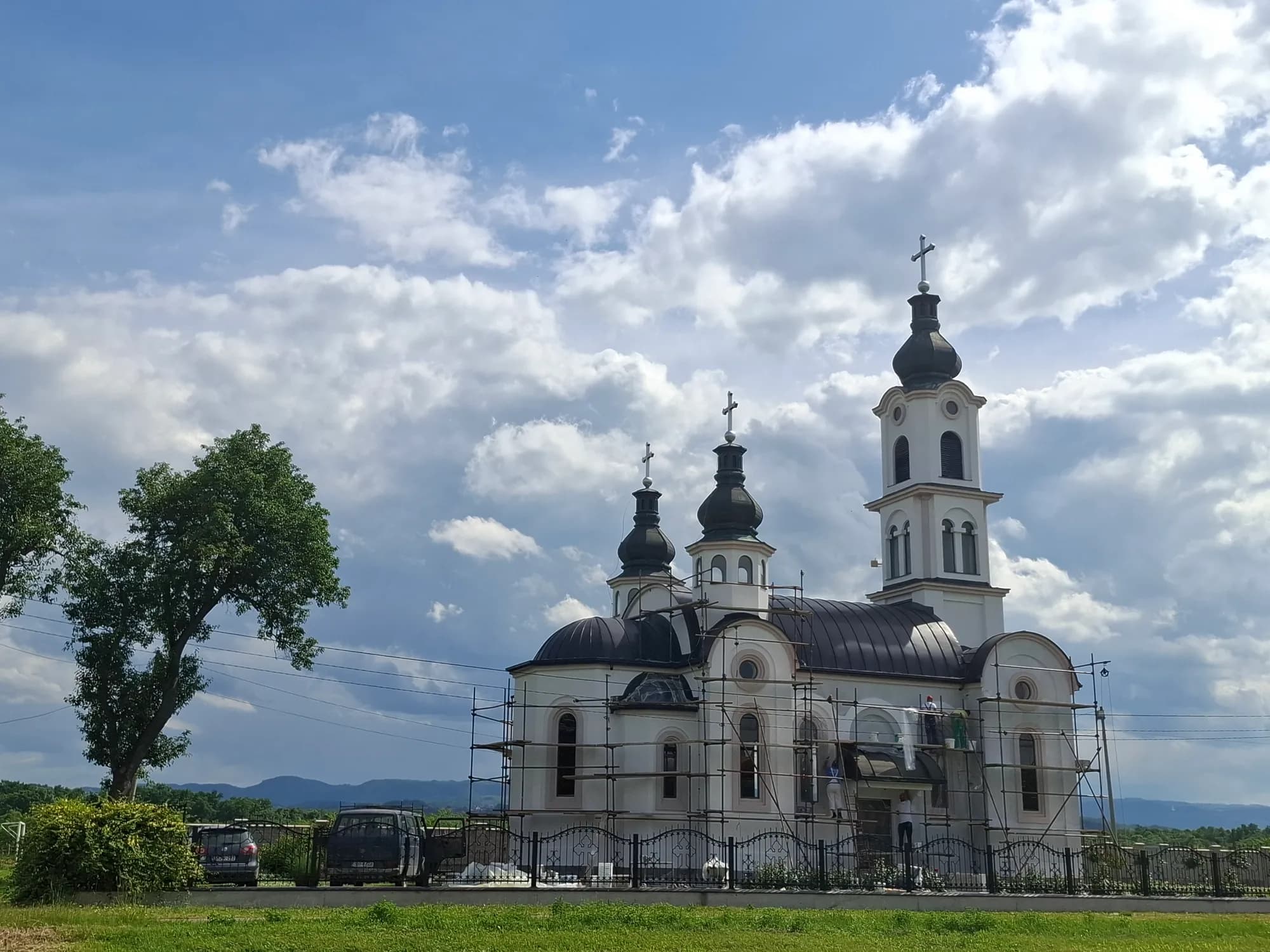
- Church of St. Nicholas – Central Temple of the Orthodox of Rožaj In the urban fabric of Rožaj, on the right bank of the Ibar River, rises the Church of St. Nicholas, which is the cathedral temple and the main liturgical and social seat of the Orthodox community of this region. Dedicated to St. Nicholas the Wonderworker, one of the most intensely celebrated saints in this region, this church is a living monument of Christian continuity under Hail. The current temple was built in 1904 on the foundations of a much older Christian sacral building that was destroyed by the Ottoman authorities during the turbulent centuries. The construction of the church at the very beginning of the 20th century was the result of the persistence of the local Orthodox population, but also the solidarity and neighborly help of the Rožaj Muslims, which remains recorded as a bright example of local history. It was built as a single-nave stone building with a bell tower, in the traditional style of the late 19th century. The interior of the temple is adorned with a richly carved wooden iconostasis with icons of high artistic and aesthetic value, made according to the strict canons of the Orthodox iconographic tradition.
- Ružica Church in Suho Polje – Medieval Roots and Restoration Located in the beautiful and tame natural surroundings of Suho Polje, not far from Rožaje, there is a church popularly known as Ružica, dedicated to the Birth of St. John the Baptist. This sanctuary has exceptional historical weight because its archaeological and folk roots go deep into the early Middle Ages, testifying to the unimposed Christian continuity of this part of Polimlje. Through centuries of turbulent history and migration, the original church has been reduced to ruins, but its place of worship has remained deeply etched in the collective memory of the people. The fundamental renovation of the temple began and was successfully completed in 1991, when today's beautiful stone building was erected on the old church. Today, the Ružica Church captivates with its reduced, ascetic architecture that blends perfectly with the surrounding meadows and forests, functioning as a space of deep silence, prayerful peace and conciliar gathering of people during major holidays.
- Church of the Lord Vrh – Spiritual Lighthouse on the Mountain Heights
On a striking hill high above the Rožajska valley, at a cult place known as the Lord's Peak (at over 1400 meters above sea level), there is the Church of the same name, Lord Peak, dedicated to Christ the Savior (Ascension of the Lord). Its specific topographic position gives it an unusual visual and symbolic significance – it literally dominates the entire Rožaje region. This more recent church was built on a site that traditionally served as a space for mountain gatherings and supplications (prayers). The position of the temple, which offers an impressive, panoramic view of Mount Haila, the Ibar Valley and the town of Rozaje, creates a strong sense of isolation from the profane world. The combination of harsh mountain nature and sacral silence makes Gospodin Vrh a unique place of pilgrimage, introspection and spiritual purification. Conclusion The sacral architecture and spiritual topography of Rožaj form a complex, tightly connected and deeply rooted landscape in which the past and the present are constantly complemented. In this city, mosques and churches were not built to defy each other, but were created as an expression of the authentic human need for spiritual refuge at the foot of merciless mountain peaks. Together, they form a unique cultural entity that defines the historical and human identity of Rožaj. This natural coexistence of faith, space and community positions Rožaje as an unavoidable and extremely important point for understanding the cultural, ethnic and spiritual history of the entire north of Montenegro.