As the capital of Montenegro, Podgorica is the administrative, cultural and spiritual center of the country. Throughout its long history, it has been a meeting place of different peoples, cultures and religions, which can still be recognized today through the numerous Orthodox churches and monasteries, the Catholic church and mosques that adorn the city and its surroundings. The religious buildings of Podgorica represent a valuable cultural and historical heritage. Some of them date back to the Middle Ages and testify to the earliest development of the city, while others were created during the Ottoman Empire or in the modern period. Each of them carries a special story and represents a significant part of the identity of Podgorica. In addition to their religious role, these buildings attract many visitors who want to learn about the rich history, architecture and traditions of the capital. That is why they are an unavoidable part of the tourist offer of Podgorica and places that connect the past and the present in a special way.
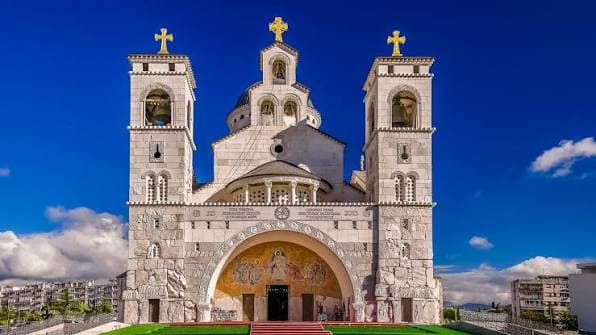
Cathedral of the Resurrection of Christ The Cathedral of Christ's Resurrection is located in Nova Varoš, near the Morača River and the Millennium Bridge. The construction of the temple began in 1993, and it was officially opened for worship in 2013. It is dedicated to the Resurrection of Christ, a holiday that occupies a special place in the Orthodox faith and symbolizes new life and the victory of good. Today, this temple is the largest Orthodox place of worship in Montenegro and one of the most famous symbols of Podgorica. It is built of stone, and its interior is decorated with numerous frescoes, mosaics and icons. Special attention is drawn to the high bell towers and the spacious plateau in front of the temple, where large religious gatherings are held. Tourists like to visit it because of its architecture, richly decorated interior and its location near the city center.
Church of Saint George The Church of St. George is located at the foot of the Gorica hill, after which Podgorica got its name. Around the church there is an old cemetery that represents part of the historical identity of Podgorica. It is considered to have been built between the 9th and 11th centuries, which is why it is counted among the oldest preserved buildings in the city. It is dedicated to Saint George, one of the most revered saints in the Orthodox tradition. During its long history, it has been renovated several times, but it has retained the distinctive look of the old stone church. In its interior there are valuable frescoes from different historical periods, while in the port there is an old cemetery where many famous people from Montenegrin history are buried. Peaceful surroundings and centuries-old pine trees make this place special for visitors who want to feel the spirit of old Podgorica.
Dajbaba Monastery The Dajbabe Monastery is located in the Dajbabe settlement, about four kilometers south of the center of Podgorica. It was founded in 1897 and is dedicated to the Assumption of the Blessed Virgin Mary. Its founder was the monk Simeon Popović, who, according to tradition, decided to build the monastery after having an unusual spiritual vision. The biggest peculiarity of this monastery is that it was built in a natural cave. The corridors and rooms are carved into the rock, and the walls are decorated with frescoes, mostly painted by Father Simeon himself. Due to its unusual appearance and peaceful natural environment, the Dajbabe Monastery is today one of the most visited spiritual places in the Podgorica area.
Monastery Cell Piperska The Ćelija Piperska monastery is located in the village of Crnci, in the area of Piperi, north of Podgorica. It was built in 1637 and is dedicated to the Nativity of the Blessed Virgin Mary. Its establishment is linked to St. Stephen of Piper, one of the most famous saints of this region. Located on a hill and surrounded by nature, the monastery has been a place of prayer throughout the ages, but also a refuge for the population in difficult times. It houses the relics of Saint Stephen of Piper, which is why many believers visit it throughout the year. The combination of natural ambience, old stone architecture and rich history of this holy place is particularly interesting for visitors.
Duga Monastery The Duga Monastery is located near the village of Duga, not far from the canyon of the Morača River. It is dedicated to the Assumption of the Blessed Virgin Mary. It is considered to originate from the Middle Ages, although throughout history it has been demolished and rebuilt several times due to wars and other historical circumstances. The monastery got its present appearance after the last renovation, but it has preserved its spiritual significance. Surrounded by forest and mountain landscapes, it is a peaceful place that visitors are happy to visit in order to get to know the history of this region and enjoy the natural environment.
Zlatica Monastery The Zlatica Monastery is located in the village of the same name in the northeastern part of Podgorica. It is believed that its roots go back to the period of early Christianity, and archaeological research has shown that there was a significant religious center in this place even in the first centuries after the acceptance of Christianity. During its history, the monastery has suffered and been rebuilt several times. Today it has been restored and represents an important part of the spiritual and cultural heritage of Podgorica. Here, visitors can see the remains of older buildings and learn about one of the oldest Christian sites in the area of the capital.
Church of the Holy Savior The Church of the Holy Savior is located on the hill of Gorica, in the immediate vicinity of the Partisan Fighter Monument. It was built as a memorial church at the end of the 20th century and is a place of remembrance for those who died in wars. Thanks to its location among the pine trees and the proximity to the city center, this is one of the quietest places in Podgorica. Visitors come here for the silence, the beautiful view of the city and the pleasant natural environment.
Church of Saint Nicholas The Church of St. Nicholas is located in the Momišići neighborhood, along the Morača River. It was built in the recent period, at the end of the 20th century, as a need of the growing local community in this part of the city. It is dedicated to Saint Nicholas, one of the most revered saints in Orthodoxy, known as the protector of travelers, children and the poor. That is why the church is very visited during the holidays dedicated to this saint. It is interesting for tourists because of its location along the Morača River and the peaceful environment in which it is located. Although it is not an old historical building, it represents an important part of the contemporary religious life of Podgorica.
Church of Saint Vasilij Ostroski The Church of St. Vasilij Ostroški is located in the Zabjelo neighborhood, one of the largest and most populated parts of Podgorica. It was built at the end of the 20th and the beginning of the 21st century, as a response to the needs of a large number of residents of this urban part of the city. It is dedicated to St. Vasilij Ostrog, one of the most beloved saints in the Balkans, known for the Ostrog monastery and numerous legends about miracles. That is why this church is very visited during major Orthodox holidays.
Old Dogan (Skender Chauševa) mosque The Old Dogan Mosque is located in Stara Varoš, the oldest part of Podgorica. It is considered one of the oldest mosques in the city and originates from the end of the 15th century, from the period of the early Ottoman presence. The mosque has been renovated several times throughout history, but it has retained its distinctive position in the old city center. The urban structure of old Podgorica developed around it, so even today it is part of the authentic ambience of this part of the city.
Osmanagića mosque The Osmanagića Mosque is located near the Clock Tower, in Stara Varoš. It was built at the end of the 18th century by Hadji Mehmed Pasha Osmanagić. In its yard there is also the turbe of its builder, which gives this place additional historical significance. The mosque was badly damaged during the Second World War, but was later rebuilt and is an active place of worship today.
Nizamiya Mosque The Nizamija mosque is located in Konik, one of the larger settlements in Podgorica. It is more recent than the old city mosques and was built to serve the growing population of this part of the city. Today, it is an important local religious center and often gathers believers from the wider city area.
Hadrovića Mosque The Hadrovića mosque is located in the neighborhood of Drač, in the wider center of Podgorica. It is a more modern mosque that represents part of the city's modern Islamic community. It is known for being located in the urban part of the city and is used daily for the religious needs of the local population.
Mosque at the Old Airport This mosque is located in the neighborhood of Stari aerodrom, one of the most rapidly developed parts of Podgorica. It was built recently and adapted to the needs of a modern urban settlement. Today it is one of the important meeting places of the Muslim community in this part of the city.
Church of the Sacred Heart of Jesus The Church of the Sacred Heart of Jesus is located in the Konik settlement, in Podgorica. It is the main Catholic church in the city and the central gathering place of the Catholic community. The church is of recent date and was built in a contemporary architectural style, adapted to the needs of believers in the urban part of the city. It regularly hosts masses, religious ceremonies and gatherings during major Catholic holidays. Although more modest compared to large temples, this church plays an important role in the religious life of Podgorica because it is the only central Catholic place of worship in the municipality.
The religious buildings of the municipality of Podgorica represent an important part of its identity and historical development. Through them, you can clearly see how the city grew and changed over the centuries, but also how different religions and cultures remained present in the same area. From the medieval churches in Gorica, through the mosques in Stara Varoš, which preserve the memory of the Ottoman period, to modern temples and churches in the new city settlements, Podgorica today has a diverse and rich sacred heritage. These buildings are not only places of prayer, but also cultural and historical monuments that help to understand the past of the city and its contemporary identity. Therefore, they represent an important part of the tourist offer and must-see points for all visitors who want to get to know Podgorica in its full width. Also, it is important to note that on the territory of the municipality of Podgorica there are other smaller churches, chapels and religious buildings in suburban and rural settlements, which are not specifically highlighted in this presentation, but are still an important part of the local spiritual and cultural tradition. They additionally confirm that religious life in this area is developed and present in all parts of the municipality.