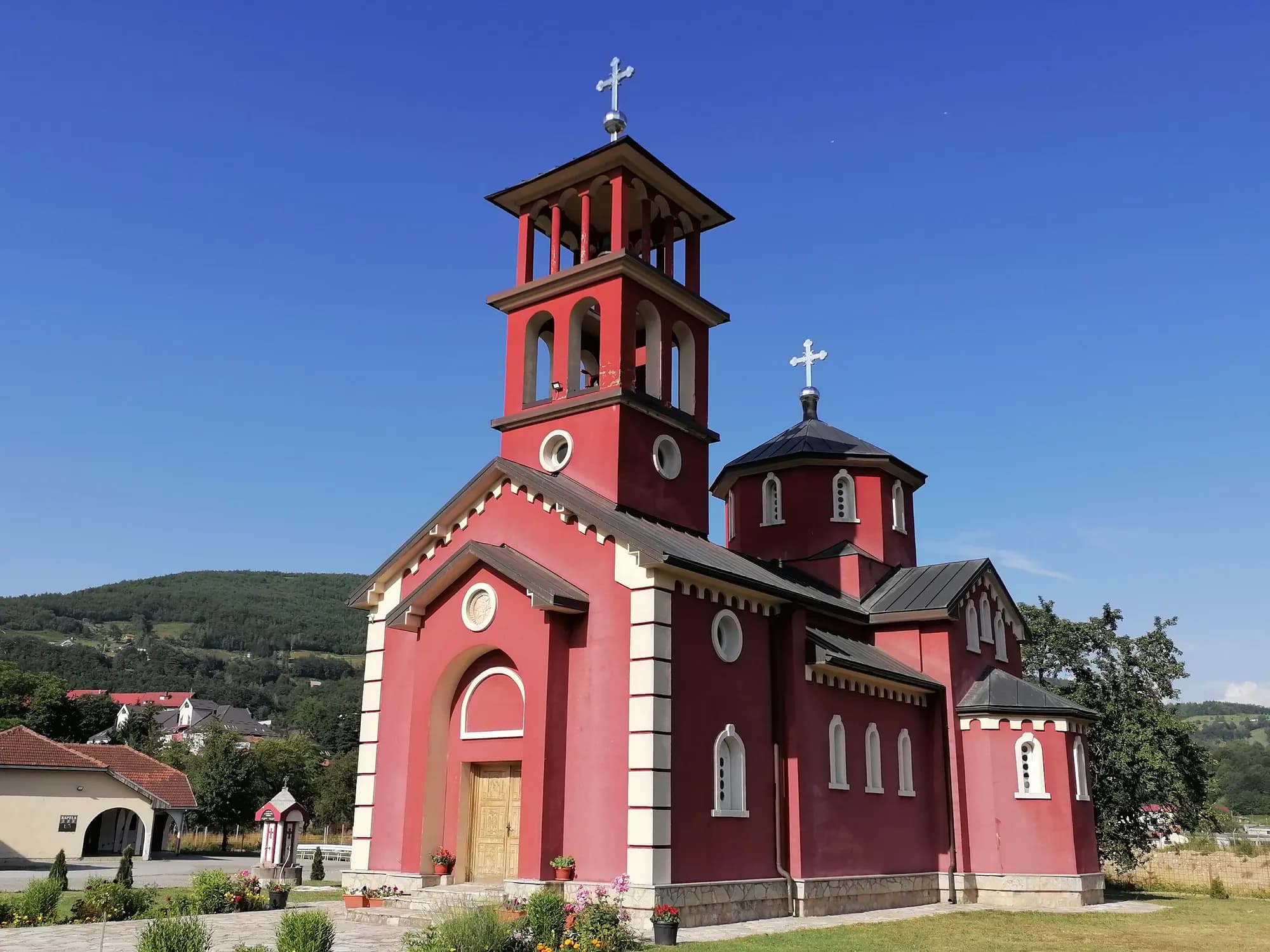
The religious buildings of the municipality of Mojkovac represent one of the most important segments of its cultural and historical identity, created in the area of the Tara River valley, where the natural monumentality of the mountain landscape is intertwined with centuries-old spiritual heritage. This area, surrounded by Bjelasica, Sinjajevina and the canyon streams of the Tara River, was shaped in specific historical circumstances in which faith, tradition and community played a key role in preserving the identity of the local population. The sacral architecture of Mojkovac has developed continuously from the medieval period, through the Ottoman era, all the way to modern times, with monasteries and churches remaining permanent symbols of spiritual constancy. Their importance is reflected not only in their religious function, but also in the cultural, educational and historical role they have played throughout the centuries. Today, they represent not only places of prayer, but also precious monuments of cultural memory and identity of the area of northern Montenegro.
Monastery of St. George "medieval guard of spirituality over the Tara canyon" The monastery of St. George in Dobrilovina is the most important and oldest sacred complex of the municipality of Mojkovac. Its origins are linked to the wider medieval period (Nemanjić tradition, with the oldest layers from the 15th-16th centuries), while the present appearance was shaped during later renovations, especially in the 19th century. Architecturally, the church belongs to the type of single-nave Orthodox churches of the Raš architectural influence, with emphasized simplicity and harmony of proportions. It was built of crushed stone, with a semicircular apse and modestly shaped facades that reflect the spirit of medieval monastic architecture. The interior is organized in the spirit of the Orthodox tradition, with an iconostasis and preserved elements of fresco painting, while the ambience of the Tara canyon further emphasizes its spiritual monumentality. Today, the monastery represents one of the most important spiritual and cultural centers of the Tara valley. During religious holidays, it gathers a large number of believers, while offering visitors a unique experience of the combination of sacred architecture and the dramatic Tara canyon. Its position, surrounded by untouched nature, gives it an almost meditative atmosphere.
The Cathedral of the Nativity of Christ "a modern temple of light in the urban heart of the Tara Valley" The Cathedral of the Nativity in Mojkovac was built and consecrated in 2008, as a modern spiritual center of the city and a symbol of recent urban development. It is architecturally designed in the contemporary Byzantine-Serbian style, with a central dome that dominates the volume of the building. The cross-shaped base, the combination of stone and modern materials, as well as the vertical structure give it a monumental but harmonious appearance. The interior of the temple is characterized by a richly painted iconostasis and a modern approach to Orthodox sacred art, which combines tradition and contemporary artistic expression. Today, the temple has the role of the city's main spiritual center and gathering place for believers. For visitors, it represents an example of modern sacral architecture that preserves tradition, but is adapted to modern times and urban space.
Church of the Annunciation "a stone guardian of the renewal of spiritual life in the 19th century" The Church of the Annunciation in Polji was built in 1893, on the site of an older shrine which, according to tradition, existed in earlier centuries. It was built of precisely hewn stone, in the form of a single-nave church with a semicircular apse, with clearly defined symmetry and modest decorative elements. The facades are simple but harmonious, while the interior retains the traditional Orthodox layout of the space. This church represents an important example of the renewal of church life in Montenegro at the end of the 19th century. Today, the church is an important gathering place for the local population during holidays, especially the Annunciation. Visitors can experience the peace of the Tara valley and the authentic village atmosphere where nature and sacred space merge into a unique whole.
Church of Saint Michael the Archangel "a mountain shrine built in the time of renewal of faith" The church in Štitarica was built in 1896, during the period of intensive construction of village churches in the north of Montenegro. Architecturally, it belongs to the type of rural one-nave churches made of hewn stone, with a rectangular base and small window openings. Its form is simple, but highly functional, adapted to mountain conditions and local materials. The church is still the center of village life today. During the holidays, the slava gathers the locals, while it offers visitors the experience of the silence of the mountain village and the authentic traditions that are still lived here.
Church of Saint Vasilij Ostroški "a modest stone sanctuary from the end of the 19th century" The church on Ružica was built in 1895 as part of a wider wave of construction of parish churches in the Tara valley. It was built from local stone, in the form of a single-nave church with a simple rectangular base, without complex decorative elements, but with a clearly expressed spiritual and symbolic character. This church has a special spiritual significance and is visited during the holidays dedicated to Saint Basil. It offers visitors an intimate experience of a small mountain sanctuary dominated by peace, quiet and simplicity.
Church of Saint Prokopius "a modern continuation of the tradition of Orthodox architecture" The Church of St. Procopius in Lepenac was built in 2011 as a modern sacred building that continues the continuity of the Orthodox tradition in this part of the municipality. Architecturally, the building combines modern construction techniques with elements of the Byzantine tradition, the dome, stone cladding and cruciform base form the basic characteristics of its appearance. Today it is an active place of worship and a symbol of the continuity of faith in modern Mojkovac. Visitors can see a fusion of modern architecture and traditional spiritual expression
Conclusion The religious buildings of the municipality of Mojkovac form a unique and multi-layered sacred entity that testifies to the long historical continuity of spiritual life in the Tara valley. From the medieval Monastery of St. George in Dobrilovina, through village churches from the 19th century, all the way to the modern Cathedral of the Nativity of Christ, a development arc that connects tradition, renewal and modern religious expression is clearly visible. These objects, although different in terms of time of creation and architectural expression, unite a common idea - the preservation of the spiritual identity and cultural continuity of an area that throughout history has been exposed to numerous social and political changes. Their architecture, from modest stone forms to more monumental contemporary solutions, reflects the harmony between man, religion and the natural environment.
Today, the religious buildings of Mojkovac represent not only religious centers, but also important cultural and historical monuments that contribute to the recognition of the municipality in the wider context of northern Montenegro, preserving its identity as a place of deep spirituality, lasting tradition and cultural stability.