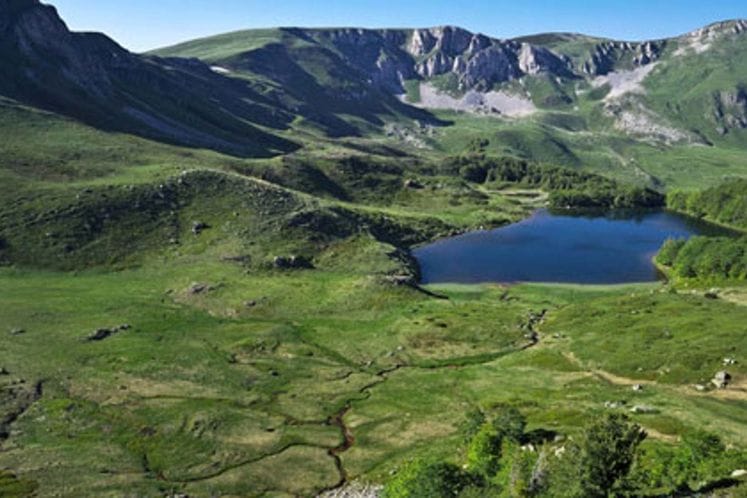
Pešića Lake, located on the mountain Bjelasica, is one of the most important and most beautiful glacial lakes in this part of Montenegro. Nestled in a spacious amphitheater between the peaks of Crna glava and Zekova glava, the lake is located at an altitude of about 1,838 meters, making it one of the highest lakes on Bjelasica. Surrounded by steep slopes that rise directly from the water, the lake has a characteristic shape reminiscent of a horseshoe, and its surface, although not large, attracts the attention of every mountaineer who heads to the peaks of this massif with its clarity and depth.
Due to its position in the high altitude zone, the lake is surrounded by remnants of snow during most of the year, which in combination with the harsh mountain rocks and the greenery of the high mountain pastures creates unforgettable visual contrasts. The water in Lake Pešića is extremely clean and cold, and its color varies from light green to dark blue, depending on the depth and the way the light is refracted on its surface.
The area around the lake is known for its wealth of endemic plant species that bloom during the short mountain summer, turning the slopes around the lake into colorful carpets of color. The trails that lead to Pešić Lake are challenging, but they offer excellent hiking opportunities, offering panoramic views of the entire Bjelasica massif and even the distant peaks of Komovo and Prokletije. This is a place where silence takes on a new dimension, and the only sound that reaches visitors is the sound of the wind breaking through the peaks and the occasional cry of mountain birds.
For lovers of nature and active vacations, Lake Pešića is not just a passing point on hiking maps, but a symbol of the raw beauty and untouched wilderness of Bjelasica. It is a witness to the glacial processes that shaped the relief of this part of Montenegro many millennia ago, leaving traces in the form of valleys filled with water. Visiting this lake requires respect for mountain nature and readiness for physical effort, but in return it offers the experience of a primordial connection with the mountain, far from civilization and everyday obligations.
As such, it remains one of the most recognizable symbols of the northern region of Montenegro, a place where nature still rules, keeping its secrets from the eyes of those who are not ready to truly step into its fold.