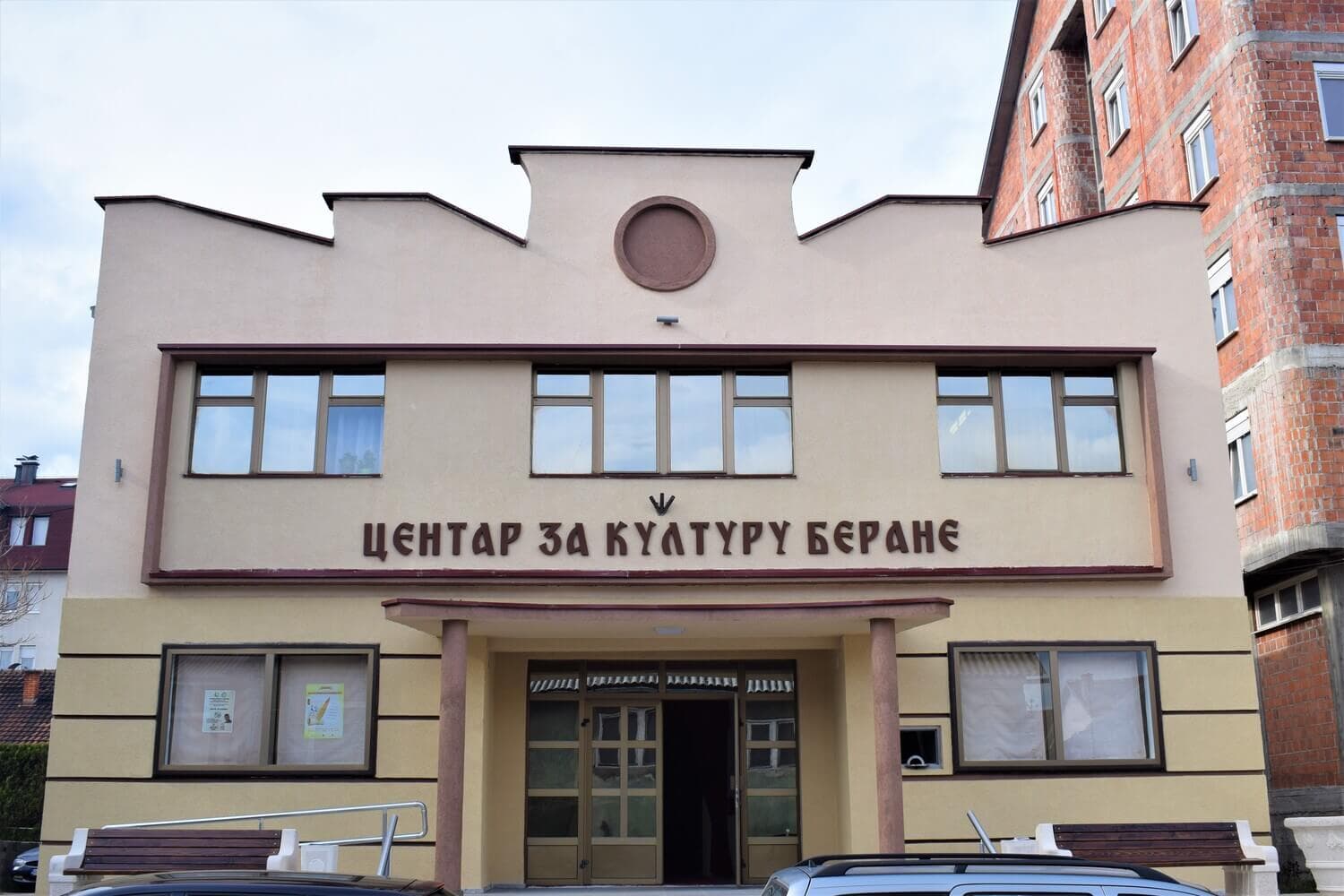
The municipality of Berane, located in the valley of the Lim River in the north of Montenegro, is an area where different historical, cultural and artistic layers intertwine. Although it is one of the smaller municipalities, Berane has an extremely rich cultural tradition that has developed through several epochs, from the oldest traces of life in Polimlje, through the Ottoman period and the formation of towns, to contemporary cultural and artistic development. The culture of this region is not only reflected in institutions, but also in memorial buildings, libraries, museums, galleries, events and people who preserve and develop cultural identity. That is why Berane is today seen as an important cultural point of the north of Montenegro, and its structure consists of several key institutions and monuments.
KEY CULTURAL INSTITUTIONS The Berane Cultural Center is the basic and most important cultural institution in the city, founded in 1960 as the Cultural Center. Over time, it has grown into a contemporary institution that combines several areas of art and public activity. Throughout the year, theater performances, music concerts, film screenings, literary evenings, forums and art exhibitions are organized here. The center serves as a meeting place for artists and audiences, connecting the local scene with authors from other cities and countries. The Public Library "Dr Radovan Lalić" operates within the Cultural Center and represents an important pillar of education and reading culture. The library has a rich book fund that includes literature from the fields of literature, science, history and art. In addition to the primary activity of lending books, the library organizes literary evenings, promotions of new editions, meetings with writers and educational workshops for young people. The Central Institution for the Conservation, Research and Presentation of the Cultural and Historical Heritage of the Wider Lim Valley Area. It has a rich fund of thousands of exhibits divided into archaeological, ethnographic, historical and art collections. The archaeological setting testifies to the continuity of life from prehistory to the Middle Ages, the ethnographic one shows the traditional way of life, while the historical one documents the development of Berane as a town. The museum also has a gallery space for exhibitions of contemporary artists and thematic exhibitions. HISTORICAL MONUMENTS AND ARCHITECTURE Memorial House of Field Marshal Gavro Vuković A memorial building dedicated to the Minister of Foreign Affairs of the Principality of Montenegro and one of the most important figures in Montenegrin diplomatic history. The house has a wider cultural function and is arranged in such a way as to bring visitors closer to the life of Duke Gavro Vuković and the socio-political context of his time. Today, it also functions as an active cultural center where literary evenings, exhibitions and lectures are held. One of the most important buildings of the Ottoman period in the city, built in the second half of the 19th century as an endowment (waqf) for the common good of the community. Its original function was related to public fountains and the water supply system from the surrounding sources. As a place of meeting and communication, it was the center of the social life of old Beran. After a period of neglect, the building was restored and today represents a key monument for understanding the urban development of the city. ART SCENE AND EVENTS The artistic life of Berane develops primarily through the exhibition spaces of the Cultural Center and the Polim Museum, where paintings, photographs, sculptures and contemporary works of art are regularly presented. Of particular importance are art colonies that bring together artists from Montenegro and the region, finding inspiration in the natural ambience of the Lim Valley and the rich historical heritage of this region. Various artistic events throughout the year further contribute to the promotion of Berane as an important cultural destination in the north of the country.