Mojkovac is an urban settlement and urban center that was formed and developed in the strategically and communicationally crucial area of the tame valley of the Tara River, framed by the monumental mountain massifs of Bjelasica and Sinjajevina. Its cultural identity is shaped through a dynamic, multi-layered and rich historical vertical – from the epochal medieval traces and glory of Brskovo as one of the largest mining and trading centers of the medieval Balkans where the first coins were minted, through the centuries-old Ottoman administrative period, to the modern and intensive urban leap in the 20th century. A special, almost sacral place in the collective historical memory of the people of this region is occupied by the famous Battle of Mojkovac in 1916. This military epic was crucial in defending and providing a retreat to the Montenegrin army during World War I, which is why it eventually grew into a strong, unavoidable symbol of local and national identity, pride and ethical code. The contemporary cultural life of Mojkovac began to be institutionally and systematically rounded up after the Second World War, and it experienced full momentum from the nineties of the last century, when a coherent, stable and recognizable cultural system of the city was formed.
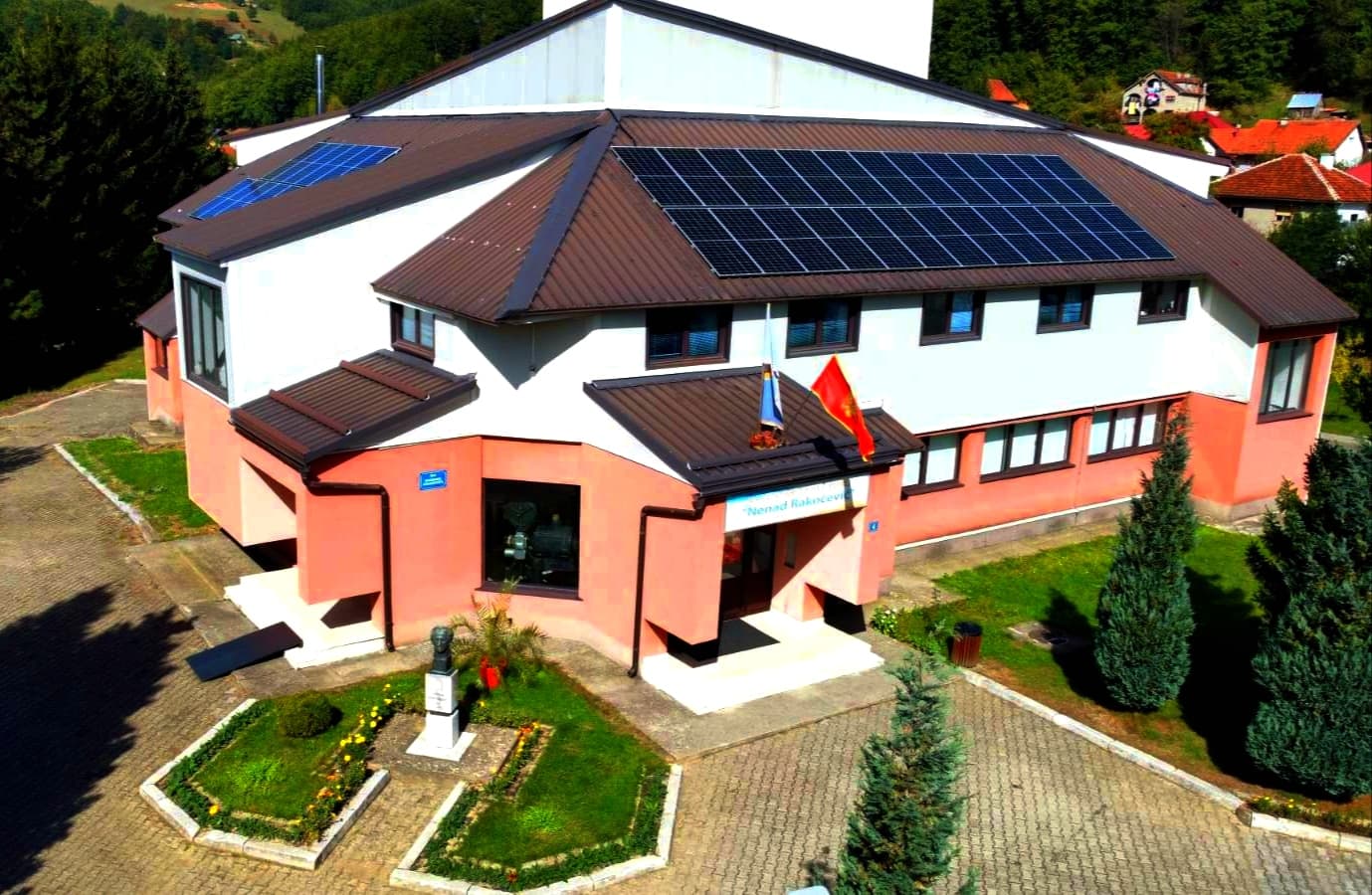
- Public institution Cultural Center "Nenad Rakočević" – architectural and organizational core of culture of Mojkovac The Public Institution Cultural Center "Nenad Rakočević" was founded on May 27, 1991 as a central, unified cultural institution that coordinates, produces and directs almost all cultural activities in the territory of the municipality of Mojkovac under its auspices. The building of the Center, located in the city center, represents a representative and striking example of public architecture of late socialist modernism in Montenegro. It was built with a clear emphasis on versatility and maximum functionality of the interior space. The large hall is designed to successfully meet the complex requirements of theater production, professional film screenings and concerts of classical and popular music, while the modern gallery and accompanying salons are intended for live exhibition, workshop and educational activities. During the three decades of its existence, the Center has grown into a key infrastructural and creative support of the city, within which artistic production, pedagogical work with young people and a rich manifestation program are intertwined.
- Mojkovac City Library – Guardian of the Written Word and Historical Memory The City Library, which operates with great success within the Cultural Center, has profiled itself as one of the most important educational, informative and spiritual hubs of the local community. Its rich and diversified fund includes representative works of domestic and world literature, professional and scientific literature from various fields, a base for the youngest readers, and a particularly valuable Homeland Collection. This specific collection jealously guards documents, rare publications, monographs and research papers that are directly related to the historical, ethnological and geographical fate of Mojkovac, the Tara Valley, Polimlje and the wider northern region of Montenegro. Within this fund, materials, testimonies and records related to the Mojkovac operation from 1916 have a special archival and documentary-historical value, which gives the library the status of a first-class research point for the culture of remembrance.
- Mojkovac Cinema – a contemporary space for film art The cinema hall of the Cultural Center is a technically equipped and aesthetically designed public space intended for the continuous presentation of the seventh art. Architecturally speaking, the space is designed as a multifunctional hall with excellent acoustic performance, perfectly adapted to demanding audiovisual projections and mass public gatherings. Throughout the year, the cinema repertoire offers the most current domestic, regional and world film achievements, with special emphasis on documentary forms and educational programs for children and young people. The cinema hall experiences its full program expansion and specific energy during the traditional festival days, when it becomes the epicenter of the city's cultural life and the main meeting place for filmmakers and the audience.
- Mojkovac Museum Collection – Memory of Space and Everyday Life
The Museum Collection of Mojkovac was constituted as a local museum unit within the Cultural Center, with the primary mission of collecting, scientifically processing, preserving and presenting the tangible and intangible heritage of this region. This multi-layered exhibition includes precious ethnographic exhibits, authentic traditional tools, objects of old handicrafts, historical photographs and rich archival material that testifies to the transformation of everyday life, economy and customs of the local population through different historical epochs. A special, historically most monumental thematic corpus of the collection is dedicated to the period of the First World War and the Battle of Mojkovac itself. Through authentic weapons, uniforms, medals and documents, this exhibition offers a direct and emotional encounter with one of the most important military and state-building events in Montenegrin history. 5. Gallery of the Cultural Center – a space of contemporary artistic expression The gallery space of the Public Institution of the Cultural Center is a representative, contemporary and light-optimally designed exhibition environment in which top solo and collective exhibitions alternate throughout the year. The space is visually conceived as a neutral, highly functional gallery unit, which allows easy adaptability to a variety of art disciplines – from classical easel painting and sculpture, through art photography, to contemporary spatial installations and multimedia performances. In addition to presenting established names of the regional scene, the gallery puts a strong professional emphasis on recognizing, encouraging and affirming young, talented authors from the Mojkovac region and Montenegro, opening the door for them to take their first professional steps. 6. International Art Colony Mojkovac – Art in the Landscape of Bjelasica and Tara The International Art Colony Mojkovac is a prestigious annual event that brings together eminent painters, sculptors and visual artists from Montenegro, the region and abroad. The untouched and dramatic landscapes of Bjelasica, the grandiose canyon of the Tara River and the endless mountain areas of Sinjajevina do not serve only as a mere backdrop, but as a direct, strong and primary artistic inspiration. The colony thus functions as a specific "open-air art studio", where the creators revalue natural beauty through the prism of contemporary aesthetic forms. All the works created during the colony permanently remain in the rich holdings of the Cultural Center, making an impressive and valuable art collection that testifies to decades of artistic encounters in Mojkovac. 7th Mojkovac Art Salon – Overview of Contemporary Art The Mojkovac Art Salon, launched in 2011 as a local festival of artistic expression, underwent a significant conceptual and administrative evolution in 2023, growing into a respectable Art Salon of the Northern Region. This event has a strictly selective and juried character, which guarantees a high artistic level of the setting. The Salon represents a representative annual cross-section of contemporary art by artists who live and create in the north of Montenegro, as well as guest authors from the wider region. Through a wide range of techniques, styles and artistic directions, the Salon offers an insight into the authentic aesthetic preoccupations and reflections of contemporary society in this area. 8. Cultural events of Mojkovac – a city that lives through festivals
Festival and event programs represent the most dynamic, most visible in the media and the most beloved segment of the Mojkovac cultural scene. The crown of these events is certainly the renowned "Mojkovac Film Autumn". Founded back in 1976, this festival holds the title of the oldest film event in the city and one of the longest-running in the country. Focused primarily on acting achievements in feature and documentary film in the region, the festival brings top cinematography every autumn, followed by rich round tables, talks with authors and expert panels. The second unavoidable event is the Folklore Festival "Zlatni ćemer". This festival successfully brings together numerous cultural and artistic societies from the country and abroad, functioning as a luxurious platform for the preservation, presentation and celebration of traditional music, folk dances, songs and the priceless wealth of original folk costumes. Conclusion The cultural landscape of Mojkovac represents a balanced, mature and deep-rooted blend of historical self-awareness, stable institutional organization and open contemporary artistic expression. In a geographical area that is permanently marked by fateful historical fractures, and especially by the immortal epic of the Battle of Mojkovac in 1916, culture is not positioned as a decorative or occasional segment of society, but as a fundamental carrier of identity, dignity and collective memory of the people. Through the synergistic and coordinated work of the Public Institution Cultural Center "Nenad Rakočević", the City Library, a valuable museum collection and a dynamic gallery, Mojkovac has built a sustainable and solid cultural system that ensures the continuity of artistic, exhibition and educational programs throughout the year. These units, although formally different in activity, pulsate as a single, vital cultural organism in which respect for tradition and the challenges of modernity complement each other. An additional, recognizable value to the overall cultural topography is given by established events such as the "Mojkovac Film Autumn" and the "Golden Ćemer" festival. They permanently and proudly put Mojkovac on the cultural map as an unavoidable meeting place in the northern part of Montenegro, bringing creative dynamics to the local environment and successfully connecting the city with wider regional and international artistic trends. In this way, Mojkovac confirms itself as an urban environment in which culture is not a sporadic incident, but a living, uninterrupted and noble process that preserves the heritage of ancestors, while at the same time bravely opening spaces to new aesthetic forms and future generations of creators.