Danilovgrad
About the city
A city on the Zeta, between history and natural beauty
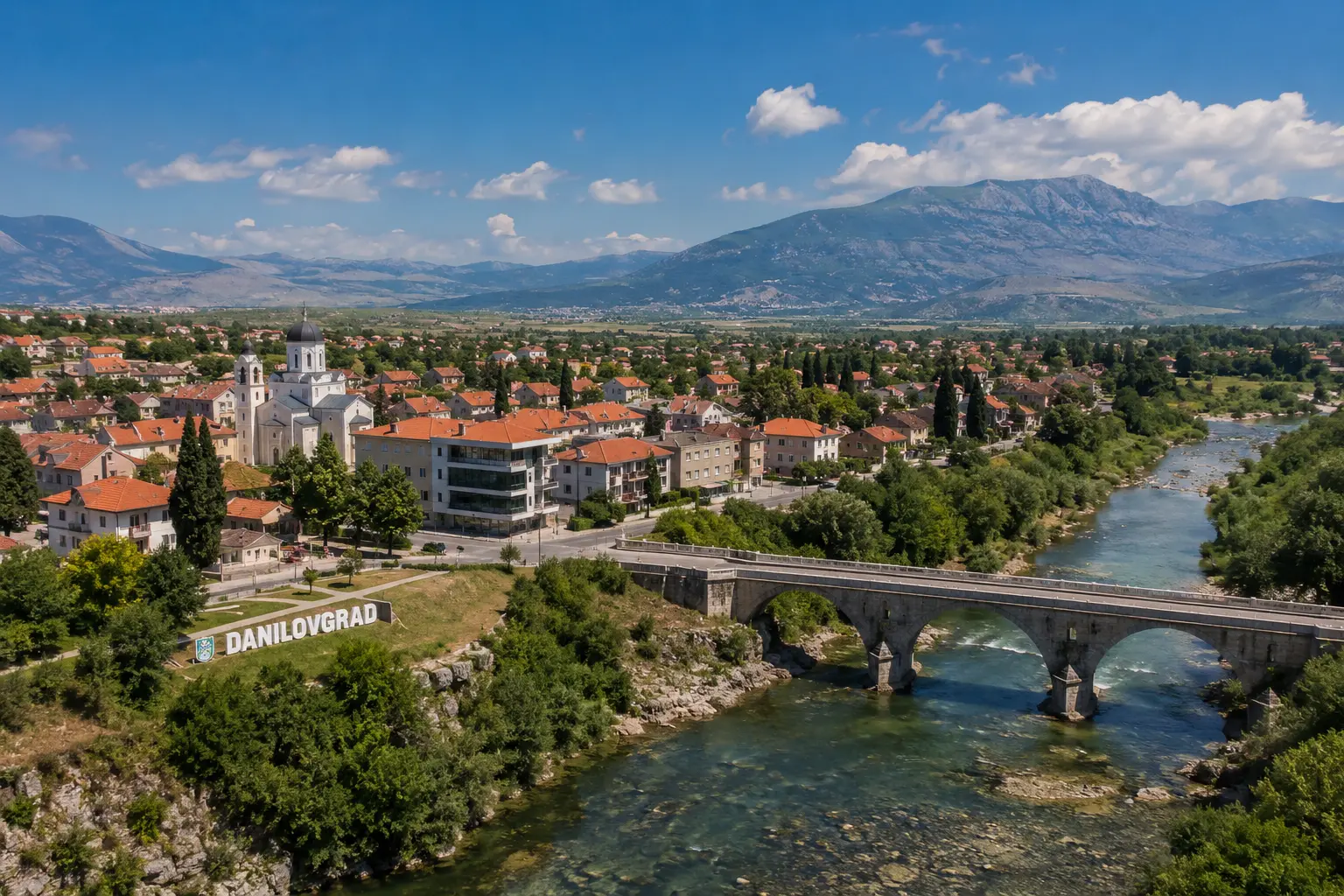
In the heart of the Bjelopavlić plain, between Podgorica and Nikšić, lies Danilovgrad, a city whose development was shaped by the Zeta River, fertile land and important roads that connect different parts of Montenegro. Its history is particularly interesting because it was created as the first planned city in the country, with an urban plan drawn up in the second half of the 19th century. Today, in its recognizable city core, the heritage of past times and the calmer rhythm of everyday life meet.
The Zeta River is one of the most important natural features of the Danilovgrad region. Its shores, surrounding green areas and the spacious Bjelopavlić plain create a pleasant environment for walking, recreation and exploring nature. Fertile lands, vineyards and traditional rural households testify to the long association of the population with agriculture. Thanks to its location, Danilovgrad is a convenient starting point for visiting the numerous natural and cultural sights of central Montenegro.
A special place in the cultural and historical heritage of this area is occupied by the Ostrog monastery, one of the most famous Orthodox sanctuaries, located high in the rocks of the Ostroška greda. Not far from the city is the Ždrebaonik monastery, which preserves a valuable spiritual and historical tradition. In addition to sacred sights, Danilovgrad stands out for its local customs, cultural creativity and hospitality of its inhabitants. Walking through its streets and exploring the surrounding villages provide an opportunity to get to know a different part of Montenegro, where city life is naturally connected to the open areas of the Bjelopavlić plain.
Activities
Journal stories from Danilovgrad
Gallery
Itera App
Explore Danilovgrad with the Itera app
Interactive map, routes, and local partners — everything you need for a perfect stay in Danilovgrad.
Learn more about the app →