This text, just like the previous one on cultural institutions, lays an excellent foundation for the presentation of the rich spiritual and material heritage of the Bjelopolje region. I did a detailed proofreading (corrected minor typographical errors, excess spacing and punctuation), stylistically harmonized the sentences to make the text sound more professional and dignified, and supplemented important historical and artistic facts that were missing in the original version (such as the famous iconostasis in Nikoljec, frescoes and manuscripts from Podvrh, and the specifics of mosque architecture). Here is a refined, corrected and expertly enriched version of the text:
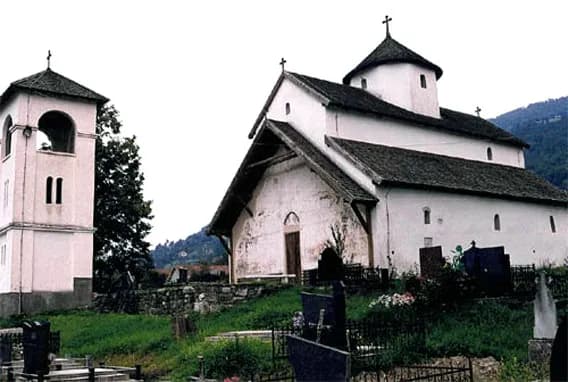
Sacred heritage of Bijelo Polje: Evidence of age-old coexistence and spirituality Religious buildings in the area of Bijelo Polje represent one of the most valuable segments of the overall cultural and historical heritage of the municipality. They bear witness to the long historical continuity of life in the Lima Valley, but also to the unique model of multiculturalism and coexistence of different confessions that has characterized this area throughout the centuries. In a relatively small geographical area, there are monasteries, churches and mosques from different eras - from grandiose medieval Christian endowments to monumental Islamic buildings from the Ottoman period. Most of them have the status of protected cultural assets of national importance and represent priceless monuments of architecture, fresco painting, icon painting and literacy. The most important Orthodox sacral objects Church of Saints Peter and Paul The Church of Saints Peter and Paul is considered the most important and oldest preserved religious building in the area of Bijelo Polje. Built at the end of the 12th century (around 1196), it was the endowment of Miroslav, Duke of Hum, brother of Stefan Nemanja. This temple has an epoch-making cultural and historical significance because it was for its needs that the famous Miroslav's Gospel was written and painted - the oldest and most representative Cyrillic manuscript of the South Slavic area, which today is under the protection of UNESCO. Throughout history, the church has been the seat of the Bishopric of Hum. With its specific architecture, which represents an early combination of Romanesque and Byzantine influences, and monumental stone bell towers, it dominates the city center and represents a first-class cultural and tourist attraction. Church of Saint Nicholas (Nikoljac) Located in Nikoljac, this church is one of the most important and best-preserved Orthodox churches in Polimlje. Although traditions and certain layers point to medieval continuity, the church in its present form was built in the 16th century. For centuries, Nikoljac was the copying and enlightenment center of this region. The interior of the church hides extraordinary wealth: frescoes of the highest quality from the 17th century, a sumptuous, wood-carved and gilded iconostasis with icons of famous zografs, as well as one of the richest treasuries in Montenegro, which stores bound manuscript books, incunabula and liturgical objects made of precious metals. Podvrh Monastery (Church of Saint Nicholas) Located in a hidden and picturesque natural environment above the Đalović gorge, the Podvrh monastery dates back to the late Middle Ages, while the present church was built in 1606. This temple is widely known for its fascinating interior fresco ensemble painted in 1613 and 1614 by the famous Pope Strahinja from Budimlje, one of the greatest masters of that era. Also, the famous Gospel of the Devil (medieval parchment manuscript from the 14th century decorated with miniatures), which was found in Podvrh, originates from this monastery. Today, it attracts numerous visitors who are looking for a perfect combination of untouched nature, spiritual peace and superb early modern art. Majstorovina Monastery The Majstorovina Monastery (with the Church of the Holy Trinity) is one of the important but historically suffering monastery complexes of Bijelo Polje. It was created in the Middle Ages, during the reign of Nemanjić, and was an important copying and spiritual center of this part of Polimlje. Throughout the tumultuous history of the wars in the Balkans, it was repeatedly demolished, burned and abandoned, which was the frequent fate of sacred buildings in this whirlwind. After a detailed renovation in recent times, the monastery came back to life, and its position at the foot of the Bjelasica mountain offers visitors an authentic atmosphere of peace and solitude. Voljavac Monastery (Theotokos Church) Located at the mouth of the river Bistrica and Lim, the Voljavac monastery with the Church of the Virgin dates back to the early 13th century, and tradition links it to Stefan Nemanja or his son Stefan the First-married. Archaeological research on this site has shown that the area was an important cult and inhabited place in ancient times. Although it was in ruins for a long time, the restoration of the complex brought back its shine to this important spiritual point that testifies to the deep roots of Orthodoxy in the Bjelopolje area. Remains of early Christian and medieval village churches In the wider area of the municipality, there is a network of smaller, but archaeologically extremely significant buildings: St. John's Church in Zaton: One of the oldest sacral sites (XII-XIII centuries) with the remains of a three-nave basilica, located in an area rich in ancient finds. Church of St. Thomas in Brzava: Medieval village church whose remains bear witness to the dense population and developed religious life in the Lima valley before the arrival of the Ottomans. The most important Islamic sacred objects Zaimović Mosque The Zaimović Mosque in Bijelo Polje was built in 1741 and is one of the oldest preserved city mosques. It was built thanks to the Zaimović beys of Bjelopolje during the period of Ottoman rule. Architecturally, it was built in a classical style with a hipped roof and a slender minaret. The interior of the mosque exudes the harmony and modesty typical of the Balkan Islamic architecture of that period. It has been renovated several times, but has completely retained its authentic spiritual function and is a permanent monument of oriental culture in the city. City (Gushmir) mosque It is located in the inner city core and is the central object of Islamic religious life in Bijelo Polje. Created in the Ottoman period, this mosque shared the fate of Bjelopolje Muslims throughout history and played a key role in the urban and social development of the city. Due to its location, architectural value and continuous religious and social activities, the Gušmir Mosque is one of the most recognizable symbols of the bazaar spirit and city identity of Bijelo Polje. Hajdar Pasha's mosque in Radulići Hajdar Pasha's mosque in the village of Radulići was built in the late 17th or early 18th century, as an endowment of Hajdar Pasha Selim, a historical figure who played a major role in the administration of this region and who formed a rich waqf (foundation) here. The mosque was a monumental building of hewn stone, covered with lead, with a tall and lavishly carved minaret, making it unique in the north. Unfortunately, during the Second World War (1943), the mosque was burned down and severely damaged. Although today it is in ruins, its monumental stone remains are under the protection of the state and represent a strong, albeit sad, testimony of the former economic and cultural power of this region in the Ottoman era. Village and neighborhood mosques In addition to the central city buildings, there are a number of smaller mosques in the suburbs and villages in the territory of the Bjelopolje municipality (such as the mosques in Rasovo, Lozna, Koriti, Sutivan, etc.). They functioned throughout the centuries as cultural and religious centers of local communities, preserving the tradition, language and intangible cultural heritage of the Bosniak and Muslim population of this region. Conclusion The sacral architecture of Bijelo Polje offers a fascinating historical chronicle written in stone, wood and frescoes. The fact that centuries-old Christian shrines, such as the Church of Saints Peter and Paul, and historic Islamic buildings, such as the Gušmir Mosque, stand proudly in the same city makes Bijelo Polje a unique cultural map of Montenegro. These buildings are not only places of prayer, but first-rate historical documents and tourist gems that attract researchers and visitors from all over the world, reminding us of the inestimable value of preserving our common heritage.