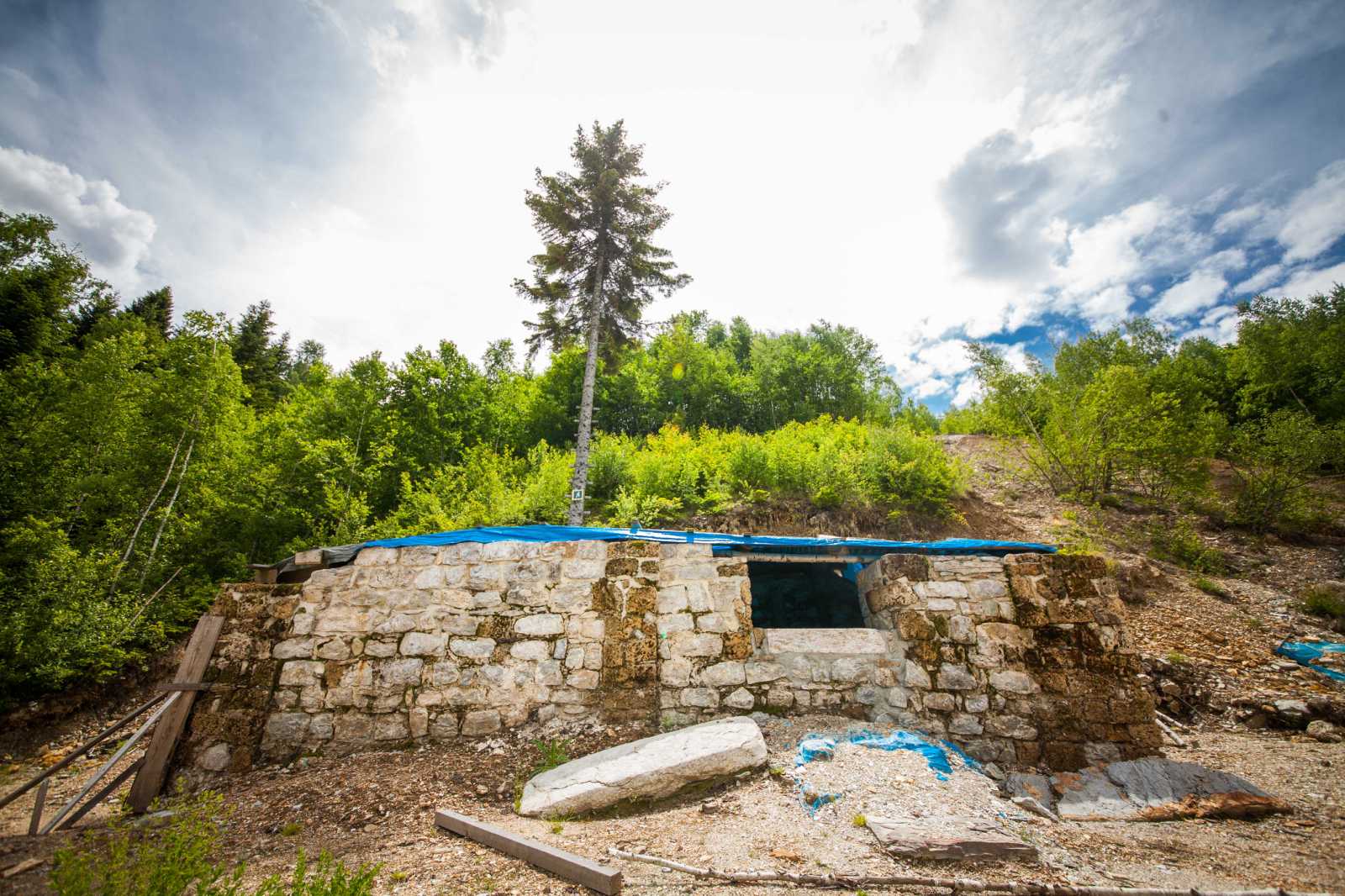
Although the municipality of Mojkovac today does not have a preserved monumental medieval fortress or an old town surrounded by high stone walls, its exceptional historical significance is reflected in the remains of the medieval mining town of Brskovo. Brskovo was one of the most important economic, commercial and blacksmithing centers of the medieval Nemanjić state. Located in the gentle and fertile valley of the Tara River, at the foot of the wooded slopes of the mountains of Bjelasica and Sinjajevina, this city during the 13th and 14th centuries represented a dynamic junction where important caravan routes crossed, advanced mining developed and stable silver coins were minted. Today, this site is a valuable archaeological site and an unavoidable testimony to the rich past of the Mojkovac region, which attracts an increasing number of lovers of history, archaeology and cultural tourism.
The medieval town of Brskovo – the mining heart of the Nemanjić state Brskovo was first mentioned in written historical sources in 1253 in Dubrovnik documents, as a formed, developed mining and trading settlement (square). Its rapid rise and golden age are inextricably linked to the reign of King Stefan Uroš I Nemanjić (1243–1276). Striving for the economic modernization of the country, King Uroš I brought experienced Saxon miners from Central Europe to this area in the middle of the 13th century. Thanks to their advanced knowledge of metallurgy and mining technology, Brskovo soon grew into one of the first and most technically organized mining centers in the entire Balkan Peninsula. Rich silver-bearing, lead and zinc ores were intensively exploited in the Brškovo shafts. It was the abundance of precious metals that triggered the strong development of domestic and international trade, craftsmanship, but also the state monetary system. The first Serbian mint was opened in Brskovo, where the famous Brskovo silver dinar (grossi de Brescova) was minted. This money, modeled on the Venetian matapan, was one of the most important means of payment in regional trade at that time. Thanks to this, the city maintained constant and intensive trade links with Dubrovnik, Kotor and other coastal and Adriatic centers. Archaeological research at the site so far has confirmed the existence of a developed medieval settlement. The foundations of residential and administrative buildings, the remains of numerous mining shafts, traces of metallurgical workshops (smelters), as well as the foundations of sacral, ecclesiastical buildings were discovered, which testify to the multi-confessional character of the city in which the local population, the Saxons and coastal merchants lived together. Although the monumental above-ground ramparts have deteriorated over time, the artifacts found clearly speak of a complex urban unit that played a key economic, administrative and judicial role in the region. Visitors to this site today have the opportunity to discover the story of the urban and economic phenomenon of the medieval Balkans through preserved underground and ground structures. Walking through this historic area, they can explore the places where the first mines were located and revive the image of the city that more than seven centuries ago pulsated with life and was in the rank of the most developed economic centers of this part of Europe. Archaeological heritage of Brskovo – traces of the city hidden under the ground Today, Brskovo rightfully occupies a place among the most important and scientifically most challenging archaeological sites in northern Montenegro. Through many years of systematic excavations, the remains of complex mining installations, residential architecture, an abundance of ceramic material of domestic and imported production, metal objects, tools, pieces of jewelry and numismatic finds have been brought to light. All these artifacts testify to the extremely dynamic and luxurious way of life that took place in this area between the 13th and 15th centuries. Although much of the former sprawling urban core is still hidden under thick layers of soil and lush vegetation, the site is of inestimable scientific value. It provides experts with a direct insight into the historical development of early mining, medieval urbanism, metallurgy and monetary economy on the territory of today's Montenegro. Precisely because of this layering, Brskovo is an unavoidable destination for scientists, researchers, but also for all visitors who want to understand more deeply the roots of medieval civilization and the interpenetration of cultures in the Balkan area. Conclusion Through the centuries, Brskovo has not managed to preserve its tall stone towers and ramparts from oblivion and decay, but it has preserved something far more valuable in the soil of the Tara valley – a material testimony and a fascinating story of the birth of one of the largest economic metropolises of the medieval Balkans. Its unquestionable historical, archaeological and cultural stratification ranks it among the most important cultural and historical monuments of the municipality of Mojkovac. For all travelers and passers-by who want to deviate from the main tourist routes to explore the authentic traces of the past, feel the spirit of the Nemanjić era and understand how mining shaped history, Brskovo offers a unique and inspiring blend of scientific mysticism and the untouched natural beauty of the Tara River Valley.