Ulcinj, the southernmost city on the Montenegrin coast, is one of the oldest urban entities in the entire Adriatic basin. Located on cliffs that dramatically cut the open sea, on the very border between the Mediterranean West and the Oriental East, this city has been the scene of conflicts and the fusion of civilizations for twenty-five centuries. From the impregnable Illyrian acropolis, through the Venetian castle, until the golden age in the 17th and 18th centuries when it functioned as an autonomous pirate republic that struck fear into the bones of sailors from Venice to the Levant, Ulcinj developed a unique cosmopolitan code. Its geography is fascinating: while the northern part of the municipality abounds with dramatic rocky bays and centuries-old olive groves, the southern part expands into endless sandy plains and unique river deltas. This makes it the perfect destination for a one-day tour that takes the traveler from the dark dungeons of medieval writers, through healing sands, to the primeval peace of the river Ada. Below we present a fluid guide through the key phases of the day, designed to reveal the historical vertical and the authentic Mediterranean spirit of Ulcinj.
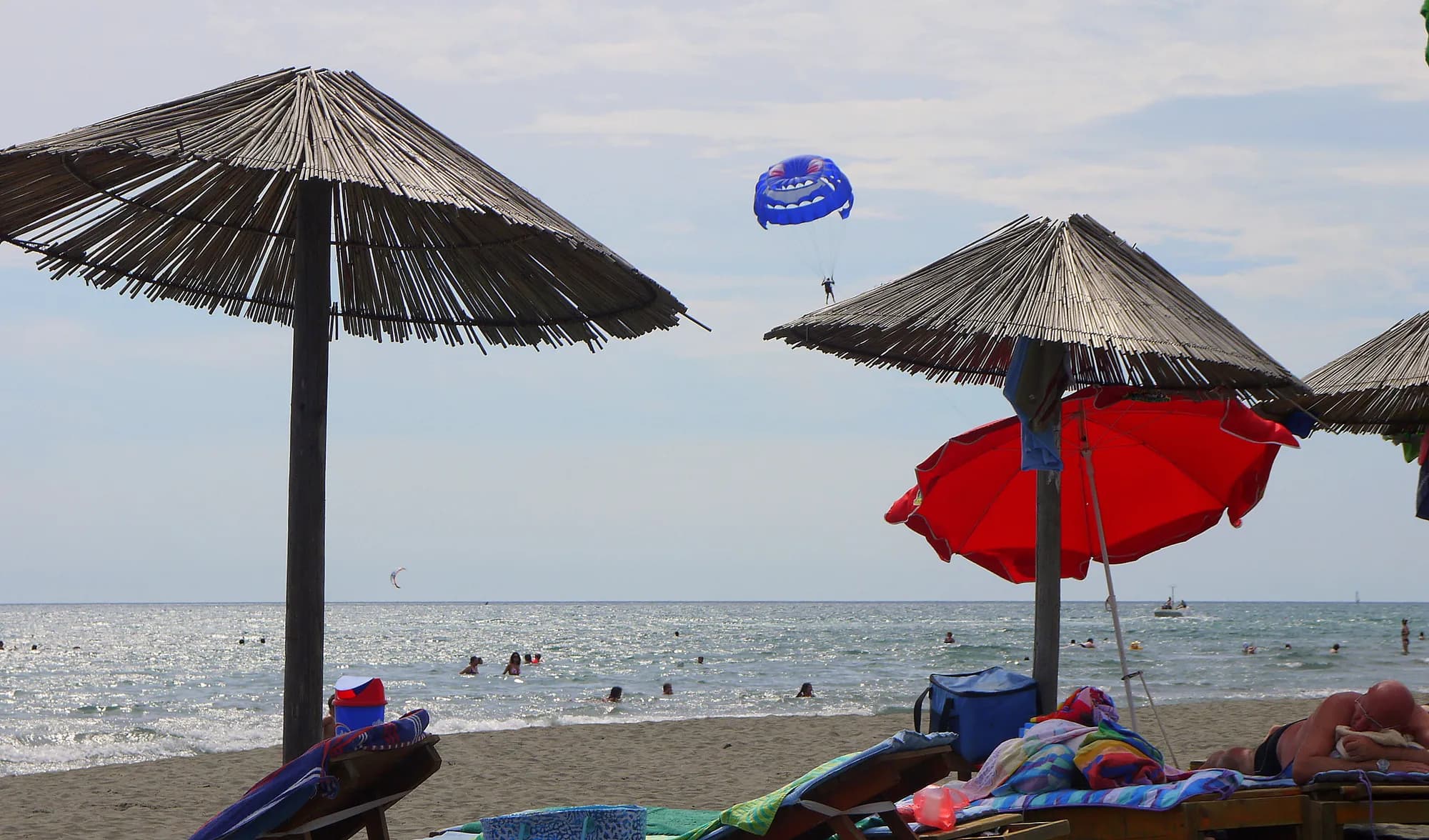
Morning within the Cyclopean walls: Cervantes, slaves and Venetian towers The research begins at the very top of a high rock, within the monumental complex of the Old Town, which with its architecture resembles a stone ship permanently stranded on the open sea. The slave market and the legend of Cervantes Passing through the northern city gate leads to the central square, historically known as the Slave Square (Plaza de los Esclavos). During the 17th century, this area was the largest and most famous slave market in the Mediterranean, where the Ulcinj pirates (uolcinjot) sold captives they kidnapped from rich Venetian and large merchant ships. The most famous local legend is deeply connected with this square and the Ulcinj dungeons - that of the Spanish writer Miguel de Cervantes. Historical hypotheses indicate that Cervantes, after the Battle of Lepanto, spent part of his five-year slavery just behind these walls. It is believed that the character of Dulcinea of Toboz, the fatal lady from his masterpiece Don Quixote, was inspired by one of the women of Ulcinj, since the name is derived from the old Italian name for Ulcinj (Dulcingo). Balšić Tower and the Museum complex At the highest elevation of the Old Town rises the Balšić Tower, a representative medieval building that served as the residence of the Montenegrin Balšić dynasty during the 14th and 15th centuries, while the upper floors in the form of an observatory were added in the Ottoman period. Today, this area, together with the surrounding buildings, forms the Native Museum of Ulcinj. Particularly fascinating is the museum building, which was originally built in the 16th century as the Church of St. Mary, and at the end of the 17th century, the Ottomans turned it into Sultan Selim's mosque. This building, with the preserved elements of the church altar and the subsequently erected minaret, represents the ultimate material evidence of the intertwining of Christian and Islamic culture. Noon in the suburbs: City bustle and the smell of olives The descent from the steep old city ramparts leads directly to Mala plaža, a crescent-shaped sandy bay that represents the historical and social heart of the Ulcinj suburbs. The city promenade that encircles Mala Plaja exudes a specific Mediterranean-oriental atmosphere, where the smell of sea salt mixes with the smell of Turkish coffee and oriental delicacies from nearby pastry shops. In the immediate back of the promenade, hidden among the green canopy, is the Church of St. Nicholas from 1890. Built under the patronage of Prince Nikola as a sign of gratitude for the liberation of the city from Ottoman rule, this church was built on the foundations of an old Orthodox monastery from the 14th century and is surrounded by a beautiful complex of hundred-year-old olive trees that create a deep, refreshing shade. Afternoon on endless sand: 13 kilometers of freedom Leaving the city center and moving south, the landscape changes dramatically and opens up into Velika plaža, the longest sandy beach on the entire eastern coast of the Adriatic Sea. Velika plaža stretches for an incredible 13 kilometers in length, all the way to the border with Albania. What makes it unique is its specific, fine gray sand of organic origin, rich in iodine, minerals and mild natural radium. Because of this geo-chemical composition, Ulcinj sand has been used for centuries for therapeutic purposes, providing a beneficial effect in rheumatic diseases and problems with the locomotor apparatus. Thanks to the constant and predictable winds (maestral and northerly) that blow during the summer months, this endless sand belt has become one of the leading European destinations for extreme water sports, primarily kitesurfing and windsurfing. Evening at the mouth of Bojana: Kalimere and primeval calm The day ends in the most spectacular way at the very end of Velika plaža, where the river ada Ada Bojana nestles at the mouth of the Bojana River into the Adriatic Sea. This specific river delta, created in the 19th century after the sinking of a ship around which the river deposited river sediment for centuries, represents a protected natural reserve and a realm of absolute silence. Kalimere - Guardians of tradition The most recognizable visual symbol of the Bojana River are calimeres - traditional wooden houses and devices with large fishing nets that can be lifted, hanging from wooden beams fixed above the river surface itself. These devices, introduced back in the Ottoman era, represent the autochthonous way of fishing and give the river a specific, melancholic and timeless look. Along the shores of Bojana, there are cult wooden sojenicas and excellent fish restaurants. Here, dinner turns into a unique gastronomic experience where only fresh catches from the river and the sea are served: the famous river fish stew, toothfish, sea bass, and indigenous species such as eel and grasshopper, which are prepared in the traditional way, on the grill with homemade olive oil and garlic. As the sun slowly sets directly into the open sea at the point where the fresh river water meets the salty Adriatic waves, the sky above Ada Bojana takes on incredible purple tones. It is this inimitable amalgam between the wild cyclopean walls of the Old Town that remember pirate chains, the mystical shadows of Cervantes, the infinite width of the Great Beach and the calming rhythm of the fishermen's calimers, that makes Ulcinj a destination that goes beyond the classic tourist templates. It is a city that provides a deep emotional and historical catharsis in just twenty-four hours, leaving the traveler mesmerized by the raw power of nature and the wealth of tradition that proudly guards the southernmost point of Montenegro. WHERE TO EXTEND THE DAY? (Alternatives for a longer stay or a different pace in the area): If you have a faster pace of touring, are planning a multi-day stay in the south, or instead of long sandy beaches you want to explore hidden natural oases and botanical phenomena, the surroundings of Ulcinj offer out-of-the-ordinary locations: Valdanos Cove and Olive Grove: A beautiful rocky cove with a beach of large pebbles, which for centuries served as a shelter for ships during strong southerly winds. Valdanos is surrounded by the largest living monument of olive growing on the Adriatic - an olive grove with over 18,000 olive trees, many of which are more than eight hundred years old, creating a unique ecological and agricultural landscape. Ulcinjska Solana: One of the most important and largest habitats of migratory birds on the entire Adriatic migration route. The former salt factory is now a protected nature park home to over 250 species of birds, among which the most attractive are colonies of large flamingos (kingfishers) and rare curly pelicans. Solana is a top European destination for birdwatching. Šaško lake and the remains of Svač: Located in the interior of the Ulcinj field, this lake is a true crypto-depression phenomenon, extremely rich in freshwater fish and waterfowl. On the rock above the lake are the ruins of the dead city of Svač, a medieval fortified city which, according to legend, had as many churches as there were days in a year (365), which was completely destroyed by the Mongols in the 13th century. Viewpoint on Mendra hill: Elevation above the Valdanos bay where there is an active lighthouse that for decades shows the way to ships at the entrance to the Ulcinj water area. From this vantage point there is a spectacular, unobstructed view of the open sea and the rocky gorges of the southern coast. Kruče and the Roman villa: A small, quiet settlement between Bar and Ulcinj, known for its exceptionally clean sea. Significant remains of a Roman villa rustica from the ancient period were discovered on this site, with preserved floor mosaics and remains of the heating system, which confirms that this coast was an elite summer resort two thousand years ago.