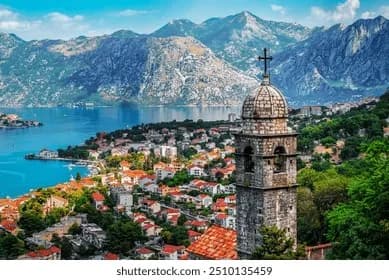
Kotor, located in the deepest corner of the Bay of Kotor, at the foot of the steep cliffs of the mountain massif Lovcen and Orjen, is an extraordinary architectural and cultural monument under the protection of UNESCO. With a history spanning more than two millennia - from Illyrian and Roman roots (Askrubium), through Byzantine rule and the golden age of an independent medieval commune, to the centuries-old period under the auspices of the Venetian Republic - this city was created as an impregnable treasure of maritime pride, trade and art. Kotor has a unique urban layout where the labyrinth of stone streets deliberately does not have a linear logic, in order to confuse potential invaders. This makes it the perfect destination for a one-day exploration, which takes travelers in just twenty-four hours from Renaissance and Baroque palaces, over steep military ramparts, to one of the most beautiful panoramic roads in the world. Below is a fluid guide through the key phases of the day, designed to reveal the hidden historical vertical and the authentic Mediterranean spirit of Kotor.
Morning inside the stone labyrinth: Squares, palaces and a cathedral older than Notre Dame The tour begins by passing through the monumental Vrata od Mor (Main City Gate) from the 16th century, decorated with the Venetian winged lion of Saint Mark. Entering the Old Town immediately reveals the Arms Square, the largest and main city square, named after the historical storage and repair of weapons during the Venetian Republic. The clock tower and the pillar of shame The massive clock tower from 1602, built in the recognizable Baroque and Renaissance style, dominates the Square of Arms. Just in front of its foot is the stone pyramidal column of shame - a historical place where in the Middle Ages and during the Venetian administration, local criminals were bound and publicly shamed, so that the whole commune could see their wrongdoing. Cathedral of St. Trypun Through a network of narrow streets, you reach the Square of Saint Tripun, where the cathedral of the same name rises, dedicated to the patron saint of the city. Consecrated way back in 1166 on the foundations of an older pre-Romanesque church, this monumental basilica is several centuries older than many famous European cathedrals, including Paris' Notre Dame. Although its bell towers underwent renovations after the devastating earthquakes, the interior preserves priceless treasures: a ciborium made of red Korac marble from the 14th century, a gold and silver pallu and a reliquary in which the relics of Saint Tripun are kept in a gilded sarcophagus. Aristocratic palaces and the Maritime Museum The continuation of the walk leads past the luxurious facades of the noble families who ruled the Adriatic seas. The Romanesque-Gothic Drago Palace with its carved windows, the Pima Palace with its distinctive Baroque balcony, and the Baroque Grgurina Palace from the 18th century stand out. Today, the Grgurin Palace is home to the Maritime Museum of Montenegro, an unmissable stop that preserves the centuries-old glory of the Bokel Navy - the oldest brotherhood of sailors in the world - through its collections of models of sailing ships, old weapons, naval charts and portraits of captains. Climbing through the ramparts: 1426 steps to the Fortress of St. John After a historic walk through a series of squares (such as Flour Square and Milk Square), it's time to master the unique fortification system. Kotor's ramparts, over four kilometers long and up to 16 meters thick, climb in a zig-zag line along the rugged cliffs of Mount Sveti Ivan (San Giovanni). The Church of Our Lady of Health and the peak of San Giovanni In order to reach the very top and the medieval Fortress of St. John, it is necessary to overcome exactly 1426 stone steps. At about half way of this demanding but unusually attractive climb, there is the Church of Our Lady of Health from the 15th century. It was erected by the surviving citizens of Kotor as a sign of gratitude to the Mother of God for saving them from the plague epidemic that ravaged the city. At the very top of the fortress, at 280 meters above sea level, the effort is rewarded with a spectacular, timeless view: the Old Town with its roofs looks like a model, while the Bay of Kotor stretches out in all its glory, framed by steep mountain giants plunging directly into the turquoise sea. Afternoon on the waterfront and an encounter with the gastronomy of Bokele Descending from the ramparts leads to the city's waterfront, the place where the historic walls and the blue horizon meet. The port of Kotor has been a window to the world for centuries, and today it is an attractive marina where luxury sailboats and monumental world cruisers alternate. This is the ideal moment to indulge in the cult of Bokele gastronomy in one of the hidden stone taverns inside the town. An authentic Bokele lunch includes a light brodet of mixed sea fish with polenta, seafood risotto, black mussels on the buzara and autochthonous olives. A gourmet pilgrimage through Kotor must end with the famous Kotor krempita – a traditional local delicacy that, unlike ordinary ones, is made with three layers of crumbly puff pastry and a specific boiled yellow cream, a recipe that has been jealously guarded in Kotor families for generations. Afternoon on the serpentines of Lovcen: Flight over the bay The second part of the day is reserved for leaving the coast and going up the iconic mountain road that connects Boka with old Montenegro. Lovćen serpentine and Kotor-Lovćen Cable Car Driving along the legendary old road leads along 25 historic serpentines designed by the engineer Josip Slade at the end of the 19th century. Each new serpentine and sharp bend opens up a wider, more dramatic and impressive view of the bay, in the shape of the letter "M" which, according to legend, Slade dedicated to the Montenegrin princess Milica. For those who want a faster and more modern mountain flight, the Kotor-Lovćen cable car is available, which leads from the Dub coastal station to the locality of Kuk na Lovćen in just 11 minutes, providing an unreal bird's eye view of the entire incredible landscape of the bay, reminiscent of the Norwegian fjords in the south of Europe. As the day slowly ends, and the sun sets behind the Orjen massif, the rocks above Kotor take on a golden and purple color. That unique harmony between the harsh, vertical gray karst that guards the city, the silence of the ancient Romanesque churches, the centuries-old maritime secrets hidden in the palaces and the mystical attraction of the bay, makes Kotor a destination that provides a deep aesthetic and historical catharsis in just 24 hours. It is a city where every stone has its own name and history, leaving the traveler mesmerized by the power of human creativity in the embrace of wild nature. WHERE TO EXTEND THE DAY? (Alternatives for a longer stay or a different pace): If you have a faster pace of touring, are planning a multi-day stay in Boka or want to explore hidden baroque settlements along the coast instead of mountain heights, the municipality of Kotor offers top localities in the immediate vicinity: Perast: An elegant and fully preserved baroque town only 12 kilometers from Kotor. It is known for its stone palaces of sea captains, the high bell tower of the Church of Saint Nicholas and the complete absence of modern construction. Gospa od Škrpjela: A unique man-made island opposite Perast, created by centuries of sinking old sailing ships and throwing stones around the underwater rock where the icon of the Virgin was found. On the island there is a beautiful church with a rich collection of votive silver plates of sailors and a museum. Risan: The oldest settlement in the Bay of Kotor, the former capital of the Illyrian queen Teuta. The main attraction are the Roman mosaics from the 2nd century AD, among which the unique and extremely rare depiction of the Greek god of sleep, Hypnos, stands out. Bajova Kula Beach: Cult and peaceful Bokelje beach located on the road to Perast. This pebble beach, surrounded by laurel forests and crystal clear sea cooled by numerous underground sources of fresh water (sopoti), offers a perfect summer break.