Žabljak, located on the vast and windy plateau of Jezera, at the very foot of the gigantic mountain massif Durmitor, represents the geographical roof and ecological heart of Montenegro. This mountain town, located at 1456 meters above sea level, is the highest urban settlement on the entire Balkan Peninsula. The area of Durmitor, which has been under the protection of UNESCO since 1980 due to its extraordinary geological, floristic and hydrological uniqueness, is an area of mythical beauty. Sculpted by glacial processes, the sharp teeth of Durmitor hide as many as 18 glacial lakes, popularly rightly called "mountain eyes". A former refuge for highlanders, epic poets and hajduks, Žabljak is today a world-renowned center of active mountain tourism. Its magic lies in the stark contrast between the gentle coniferous forests, the vertical limestone cliffs and the deepest river abyss in Europe. This makes this destination perfect for an intense one-day tour that combines the primordial silence of the lake with adrenaline-pumping construction wonders. Below we bring you a fluid guide through the key phases of the day, created to discover the wild beauty and authentic identity of the Durmitor region.
Morning in the mirror of mountain eyes: Black Lake at the foot of Međed
A mountain day at this altitude begins with a breath of sharp, resinous air and a walk through dense, hundred-year-old black pine and spruce forests that lead to the hydrological jewel of Durmitor.
Black Lake and the phenomenon of bifurcation
Crno jezero, located in the immediate vicinity of Žabljak, is the most famous and the largest among Durmitor's glacial lakes. It consists of two smaller basins, the Great and the Small Lake, which are connected by a narrow surface strait that dries up during the dry summer months, creating two completely separate water mirrors. The grandiose, dark silhouette of the Međed peak (2287 m above sea level) stands guard over the lake, whose cliffs are so faithfully reflected in the clear, dark green water that the lake gets its name because of that shadow. Around the lake there is a well-maintained footpath about three and a half kilometers long, ideal for a morning walk. A special hydrological rarity of this place is the phenomenon of bifurcation - water from the Small Lake flows into the Tara River through underground channels, while water from the Great Lake goes to Komarnica and Piva, which represents a unique natural phenomenon of watersheds.
Noon over Europe's Suez: Tara Canyon and an engineering symphony
The road from the lake basin leads to the northeastern edge of the national park, where the land abruptly splits into one of the deepest and most fascinating river cuts on the planet.
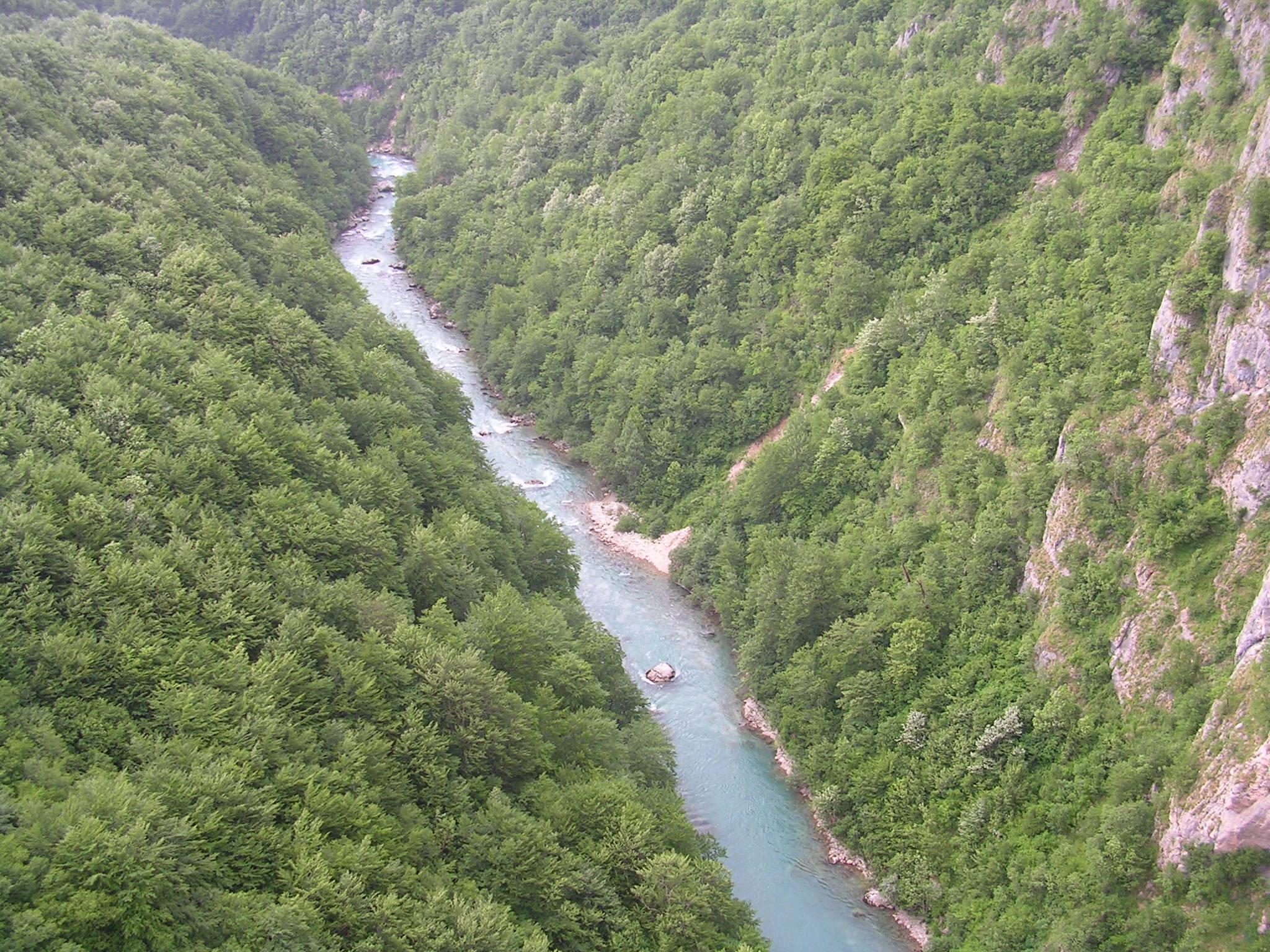
Tara River Canyon
The Tara River, rightly called the "Tear of Europe" because of its crystal clear and drinkable water, cut a magnificent canyon 82 kilometers long, with a maximum depth of 1333 meters. This information officially makes the Tara canyon the deepest in Europe and the second largest in the world, right behind the famous Grand Canyon of the Colorado River in the United States of America.
Bridge on Đurđevića Tara
At the intersection of the roads between Žabljak, Pljevlje and Mojkovac rises the Đurđevića Tara Bridge, one of the greatest masterpieces of Yugoslav and world arch bridge construction. Built from 1937 to 1940 according to the project of top engineer Mijat Trojanović, the bridge consists of five magnificent arches, the largest of which has a span of 116 meters. With a height of 172 meters above the river level, this concrete colossus seems incredibly light and harmonious, as if it had grown naturally from the cliffs of the canyon. The bridge also bears a deep historical stamp: during the Second World War, in order to prevent the advance of enemy troops, engineer Lazar Jauković demolished one of the auxiliary arches, paying for this patriotic act with his own life, which gives an additional, heroic dimension to this architectural wonder.
Afternoon on the path of St. Sava: Panoramic views of Sava's hip After the dramatic depths of the canyon, the late afternoon is reserved for the return to the high mountain areas and the ascent to one of the most striking peaks of Durmitor.
Savin kuk and medicinal water
Sava kuk, with its 2313 meters above sea level, is a recognizable pyramid that dominates the southern horizon of Žabljak. During the warmer part of the year, the cable car allows visitors easy access to the high areas of this peak, from where there is an unobstructed panoramic view of the Jezera plateau, the blue depths of the Black Lake and the surrounding Durmitor massifs such as Bobotovo kuk and Prutaš. This peak is associated with an ancient folk legend about Saint Sava, who, according to legend, walking towards these springs, crossed the stone with his stick from which the spring of pure mountain water came. This spring, known as Savina voda, is located at a high altitude and is one of the highest natural springs in the Balkans, and the local population has attributed its medicinal and healing properties to it for centuries.
Respite with the strong flavors of the Durmitor pastures
An intense mountain day in Žabljak requires energetic, autochthonous gastronomic refreshment. For centuries, Durmitor's cuisine was adapted to harsh winters and the hard work of herders on the high mountains. The main specialty of this region is the Durmitor kačamak, a dish made from potatoes and homemade flour that is painstakingly "beaten" and mixed with a special wooden tool (ash mason jar), and then topped with mature cheese and cream. A special gastronomic gem is the Durmitor mixed shell, a product with a protected geographical origin that ripens in sheepskin, acquiring a specific, sharp aroma and yellowish color. With lamb slowly roasted under an iron griddle, homemade tsicvara and a glass of cold sour milk from the mountain pastures, this meal becomes a complete cultural ritual. As the shadows of Međed slowly conquer the peaceful surface of the Black Lake, and the sun sets behind the sharp limestone ridges, the mountainous area of Žabljak takes on an epic peace. It is precisely this perfect harmony between the mysterious depths of the mountain eyes, the terrifying monumentality of the deepest European canyon, the engineering flight of the Tara bridge and the pungent, honest flavors of the mountain crust, that makes Žabljak a place that goes beyond ordinary tourist routes. One day at this height is enough for the traveler to feel the raw poetry of nature, understand why this area is the eternal inspiration of folk poets and take home a piece of primeval strength that permanently binds a person to the Durmitor heights.
WHERE TO EXTEND THE DAY? (Alternatives for a longer stay or a different pace in the area):
If you have a faster pace, are planning a multi-day exploration of the massif, or are looking for hidden archaeological and natural rarities instead of classic hiking trails, the surroundings of Žabljak offer top locations:
- Viewpoint Ćurevac: Located at 1,625 meters above sea level, this viewpoint offers the most dramatic and direct view of the deepest part of the Tara River canyon. From Ćurevac, there is a fascinating view of the steep cliffs of over a thousand meters and the small, isolated village of Tepca, hidden at the very bottom of the river abyss.
- Vražje and Riblje jezero: Located on the vast and exposed Jezera plateau, ten kilometers from the city, these two glacial lakes present a wonderful natural contrast. Devil's Lake is known for its specific, turquoise-blue water color and legends about winged horses that live in its depths, while Fish Lake is a peaceful haven rich in fish. In their immediate vicinity are the stećci on Grečka glavica - medieval tombstones under the protection of UNESCO.
- Panoramic ring "Durmitor ring": A circular asphalt route of about 85 kilometers in length that encircles the entire Durmitor mountain, leading through the most fascinating parts of the national park. The route passes over the Sedlo mountain pass (1907 m above sea level), past the mythical Prutaš peak, through the canyon of Sušice and authentic pastoral villages, offering uninterrupted panoramic views.
- Zminje jezero: Hidden deep in a hundred-year-old spruce forest, not far from Black Lake, this small lake exudes a mystical silence and dark green color. Zminje jezero is an ideal retreat for those looking for complete isolation and peace, far from the most visited tourist trails.
- Ice cave: Located in the heart of the massif, at an altitude of 2180 meters at the foot of the Obla Glava peak, this cave is the eternal natural refrigerator of Durmitor. Inside the cave, regardless of the season, there is a fascinating gallery of natural ice stalactites and stalagmites that reach a height of several meters, accessible to more experienced mountaineers.