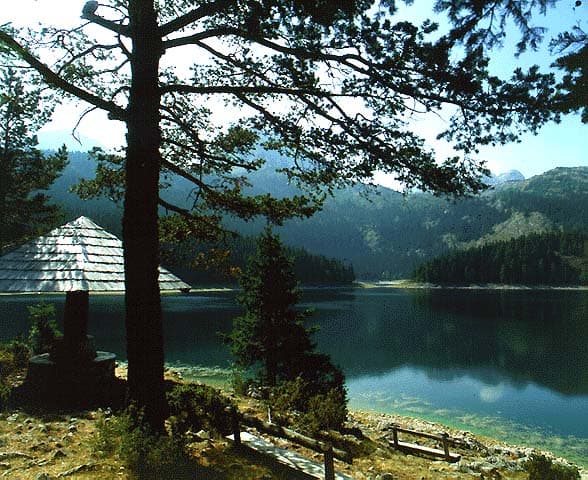
Kolašin, located in the upper reaches of the Tara River and framed by the grandiose massifs of Bjelasica and Sinjajevina, is the epicenter of mountain tourism and the natural jewel of Montenegro. Founded in the 17th century as an Ottoman fort on the caravan route, this city has developed a unique mountain identity over the centuries in which the tradition of Montenegrin hills and untouched ecological splendor are intertwined. Kolašin is an ideal destination for a one-day tour during all seasons: in summer it offers the freshness of dense rainforests and mountain viewpoints, while in winter it grows into a modern ski center of European rank. Due to the optimal spatial organization, it is possible to experience a complete transformation of the landscape here in just twenty-four hours – from the urban charm of the old square to the mystical silence of the rainforest lake. Below, we bring you a fluent and carefully optimized guide through the key phases of the day, designed to get the best out of the Kolašin region.
A morning in the sign of architecture and mountain air The exploration of Kolašin begins in the city center, which exudes peace, clean air and the specific architecture of the town in the north. The central Upper and Lower Squares, connected by a pedestrian zone and framed by centuries-old linden trees, are an ideal place for the first morning coffee and breakfast in one of the local bars. Memorial House (Masterpiece of Architectural Modernism) In the very center of the city is the Memorial House of the Fighters and the People's Revolution, one of the most fascinating and original achievements of Yugoslav brutalist architecture. Built in 1975 according to the project of the famous Slovenian architect Marko Mušič, this building made of natural concrete and glass was made in the style of expressionism, inspired by the shapes of traditional Kolašin houses under a cap of snow. The building was erected in memory of the historic session of the ZAVNO (National Anti-Fascist Council of the People's Liberation of Montenegro and Boka) in 1943, when Montenegrin statehood was restored here. Church of St. Demetrius A short walk from the Memorial House leads to St. Demetrius Church, the city's main Orthodox temple. Built at the end of the 19th century, immediately after the liberation of Kolašin from Ottoman rule, this single-nave stone building with a bell tower on a distaff represents an important spiritual and historical anchor of the local population, preserving the memory of the turning points and liberation wars of this region. Noon in the mystical depths of Biogradska Gora After getting to know the city, the road leads about ten kilometers north to the Biogradska Gora National Park, one of the oldest protected natural areas in the world. This area was placed under strict protection in 1878, when local tribes donated this property to Prince Nikola Petrović, since when it has been known as "Knjažev zabran". Lake Biograd and Europe's Last Rainforest Biogradska gora preserves one of the last three rainforests on European soil, with maple, ash, fir and beech trees that are over four hundred years old and over 40 meters high. In the very heart of this rainforest silence, at 1094 meters above sea level, is Biograd Lake – the largest and most famous glacial lake within the park. Around the lake stretches a 3.4-kilometer-long and educational hiking trail, ideal for an easy one-hour walk through untouched nature. For a complete experience of this emerald-green mirror, it is recommended to rent wooden rowboats, which gives you a unique perspective of the mountain peaks that surround the lake. A break with the iconic dishes of the mountainous north The middle of the day and the return from the rainforest air bring the perfect moment to meet the famous Kolašin gastronomy, which is deeply rooted in the livestock tradition of Bjelasica and Sinjajevina. Lunch in one of the traditional national restaurants or ethno-villages offers a unique gourmet experience. The star of the local table is the Kolašin puff cheese, a product with a protected geographical origin that is made using a special technique of stacking infinitely thin, transparent layers of cheese. In addition to cheese, an unavoidable experience is soaked kačamak (a traditional dish made of potatoes and flour that is "beaten" for a long time with a wooden elbow, and then soaked with young cream and puff cheese), as well as cicvara, and homemade lamb roasted under a bell. Afternoon on the heights of Bjelasica: Viewpoints and modern ski resorts The second part of the day is reserved for climbing Mount Bjelasica, a tame, green and volcanic mountain that is completely different from other, mostly karst mountains in Montenegro. An asphalt road leads to its heights through forest areas, leading directly to modern tourist centers. Ski centers Kolašin 1450 and Kolašin 1600 Today, Kolasin is home to an impressive, interconnected ski system that includes the Kolasin 1450 and Kolasin 1600 bases. These centers have over 45 kilometers of well-maintained trails and state-of-the-art six-seater cable cars. During the winter months, a dynamic ski life pulsates here, while during the summer season, the cable car on Kolašin 1600 offers a spectacular panoramic ride to the top of Troglav. From these mountain heights, there is an unforgettable view of the vast katuns (traditional summer cattle breeding villages), mountain eyes and the remote Montenegrin mountain ranges, providing a sense of endless freedom. Evening: Mountain peace and the end of the day on Tara The day ends with a return at sunset to the banks of the Tara River, the "Tears of Europe", which flows right next to the city. A leisurely evening walk along its clear and fast mountain waters, while the air from Bjelasica brings a recognizable evening freshness, provides an ideal space for gathering impressions. It is this unique contrast between the monumental brutalist architecture in the city center, the centuries-old peace of the rainforest Lake Biograd, the vastness of Bjelasica and the heavy, caloric traditional table, that makes Kolašin a destination that manages to regenerate the body and nourish the soul in just one day. Twenty-four hours are quite enough for this city to charm you with its tame highlander soul, but also to make you come back to it again and again, regardless of the season. WHERE TO EXTEND THE DAY? (Alternatives for longer stays or a different pace): If you have a faster pace of sightseeing, you have more days or instead of mountain heights you want an adrenaline adventure, the wider territory of the municipality of Kolašin offers top sites: Morača Monastery: One of the most important and most beautiful medieval monuments in Montenegro, erected in 1252 by Prince Stefan Nemanjić. It is located about 30 km from Kolasin, above the Moraca canyon, and is known for the famous fresco "The Raven Feeds the Prophet Elijah" and the port rich in flowers. Mrtvica Canyon and Mrtvička grede: One of the most exciting and attractive hiking routes in the country. The canyon of the Mrtvica River hides hidden gems such as the "Gate of Wishes", the old Danilo's Bridge and the famous "Mrtvičke grede" – a hiking trail that is painstakingly carved directly into the vertical rock of the canyon. Tara River Canyon (Rafting): For adrenaline lovers, the lower part of the Tara River offers unforgettable rafting and rafting through the deepest canyon in Europe, recognizable by its turquoise water color and spectacular waterfalls. Sinjajevina: The largest Montenegrin mountain in terms of expanse, which is a huge karst plateau with endless pastures, ideal for jeep-safari, cycling and complete relocation from civilization.