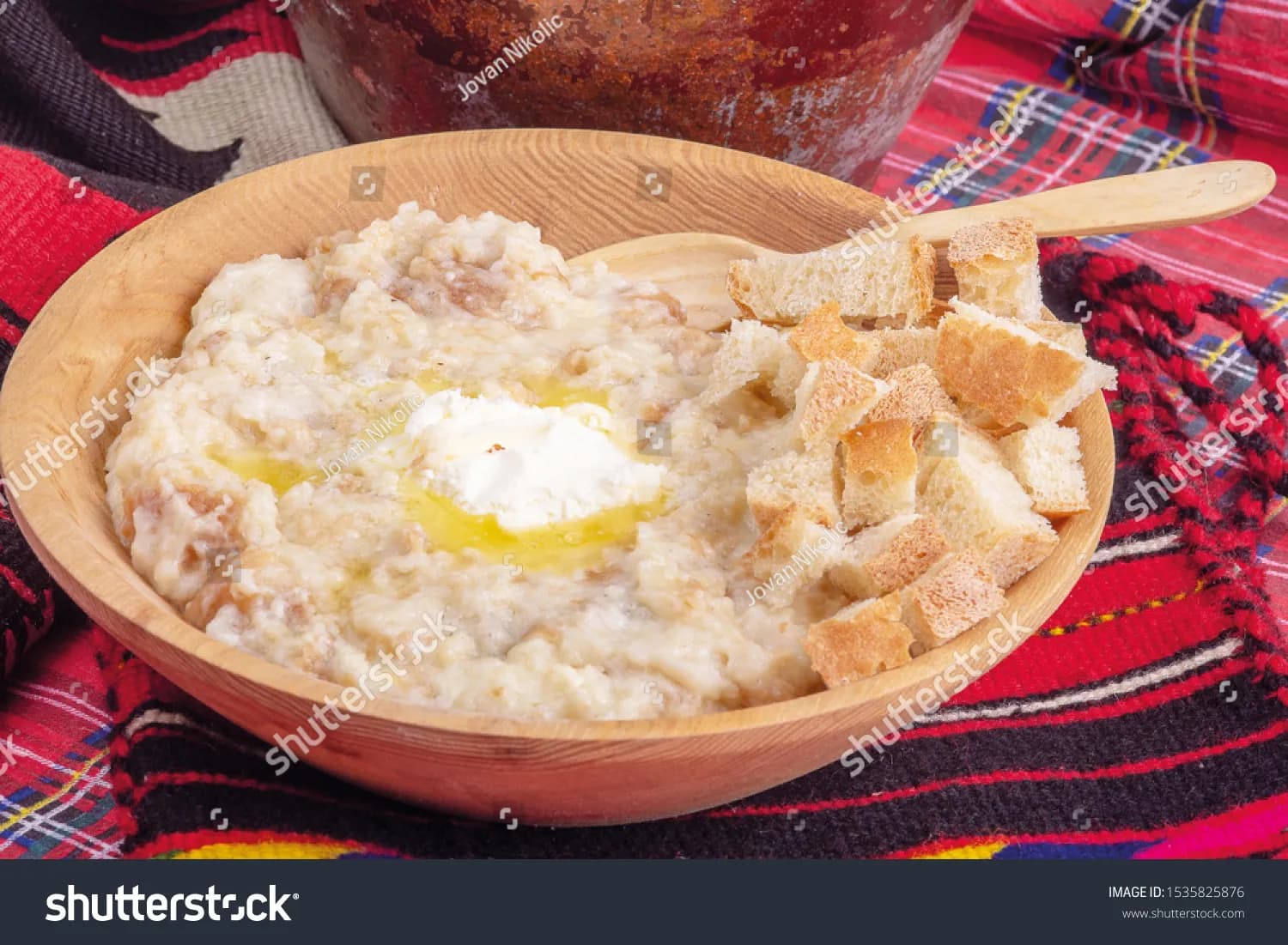
Some of the most valuable dishes of traditional cuisine were born from the need not to waste any food. Popara is perhaps the best example of such wisdom. From old home-made bread, a little milk or water, cheese, cream or butter, a warm and nutritious meal was created that was part of daily life in Montenegrin households for generations.
At a time when bread was kneaded once or twice a week, every slice was precious. When it lost its freshness, it did not end up as waste. Instead, it turned into a new dish that brought the family together at the table and showed how much the hosts knew how to value the fruits of their labor. Popara - a humble dish that over time became part of the gastronomic identity of Montenegro - was born from this attitude towards food. The basis of popara is homemade bread cut into pieces, which is poured over with warm milk, water or soup, and then cheese, cream, crust or homemade butter are added. As the ingredients slowly come together, the bread absorbs their flavors and turns into a soft, warm meal with a rich texture. Although the recipe is simple, it is the quality of the local ingredients that determines its final taste. Popara was prepared in almost all parts of Montenegro, but no family made exactly the same version. In mountainous areas, full-fat cheese and rind were often used, which gave the dish a more pronounced taste and more nutrition. In other regions, cream or homemade butter was added, while some households used boiled meat soup to make the soup even richer. Each of those variants was part of a family tradition that was passed down from parents to children. It was most often served for breakfast, especially during the colder months when a meal was needed that would warm and give enough energy to work in the field, in the forest or on mountain pastures. For many people, popara was the first morning meal before going to work, and its smell remained one of the most beautiful memories of family kitchens and childhood spent in the countryside. Although born of modest circumstances, popara was never a sign of poverty. On the contrary, she was an example of household wisdom and respect for food. In the Montenegrin tradition, it was believed that what was acquired through hard work should not be wasted, so every food had its place on the table. It is precisely for this reason that the popara still carries a strong symbolism of responsibility, modesty and gratitude. Contemporary gastronomy is increasingly recognizing the value of such traditional dishes. Many restaurants that cherish authentic Montenegrin cuisine are once again including popara in their offer, preparing it from homemade bread, local cheeses and dairy products from nearby farms. In this way, this old dish gets a new place in modern cuisine, while retaining its original character. For travelers who want to get to know the real Montenegro, popara is much more than a simple breakfast. She talks about a time when life was slower, when every meal was made from what the household produced and when the common table was a gathering place for the whole family. Its simplicity hides the story of work, respect for nature and values that have shaped the lives of numerous generations. Popara is therefore not only a traditional dish. It is a reminder that the greatest gastronomic wealth often does not come from expensive ingredients, but from knowledge, experience and the desire to create a meal from what nature provides that will nourish both the body and memories. It is precisely for this reason that popara still holds a special place in the hearts of many people and remains one of the silent but indispensable symbols of Montenegrin cuisine.