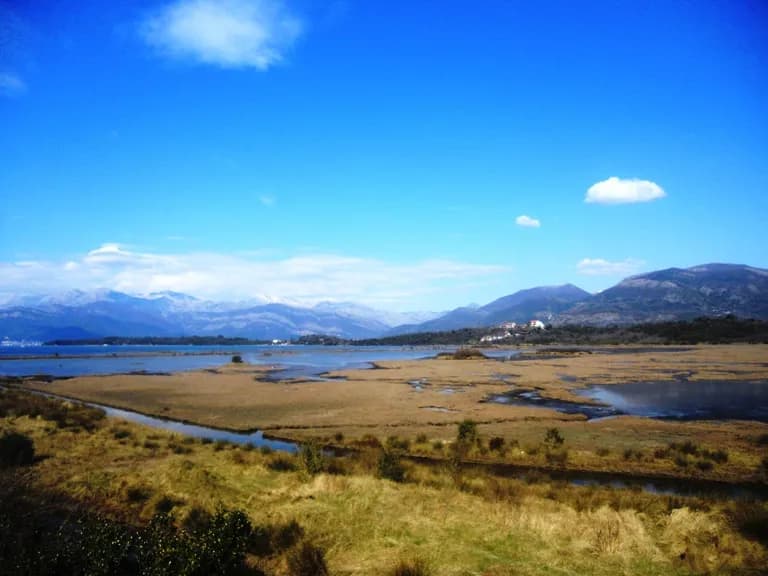
When you pass the highway that connects Tivat and the Krtolje peninsula, at the very bottom of the Grbaljsko polje, you will come across a completely quiet, peaceful and seemingly forgotten expanse where the shallow sea, marsh grass and sky meet. These are the Tivat salt pans. This locality, which is entirely located in the territory of the municipality of Tivat, was declared a natural monument in order to preserve one of the last remaining, authentic wetland ecosystems on our coast from the pressure of mass tourism, urbanization and noise, which, due to its ecological value, was also included in the Ramsar list of wetlands of international importance.
The relief of Solila is specific and is entirely the product of both natural forces and centuries-old human work. It is a spacious, flat and shallow Lagoon, interspersed with old embankments, canals and shallow pools. Centuries ago, since the Middle Ages, this area was used for the traditional collection of sea salt, and how important it was is evidenced by historical records, according to which a third of the Kotor municipality's income once relied on this "white gold". When salt production ceased, nature took over, and these abandoned salt pools slowly turned into a salt marsh, a rare and precious natural phenomenon. In the ecological and scientific sense, the Tivat Salt Flats are recognized as a true ornithological paradise on the Adriatic. Due to the abundance of food in the mud and shallow water (small crustaceans, worms and molluscs), but also due to the incredible peace that reigns here, Solila has become one of the key stops for migratory birds on their long and exhausting journey across the Adriatic Sea.
So far, over 110 species of birds have been registered here, which is almost half of the total number of bird species in Montenegro! Solila has become widely known as a place where beautiful, elegant flamingos can be seen during spring and autumn, which attract nature lovers with their distinctive appearance. In addition to them, walking through the marsh you can see various types of herons, cormorants, egrets, as well as rare species of ducks and snipe that find a safe hiding place and feeding ground here. In addition to the incredible bird life, this natural monument preserves a very specific, rare flora. The soil here is extremely salty, so so-called halophytic plants thrive on it, species that have developed incredible mechanisms to survive in salty mud. During autumn, these plants change color and the entire area of Solila both in beautiful reddish and purple tones, creating a landscape that seems completely unreal and exotic.
The cultural and historical importance of this place is enormous and inextricably linked to the Boke tradition. Old stone piers, the remains of channels through which the flow of sea water was once controlled, as well as traces of medieval and later buildings, remind us of the time when Solila fed the entire region. Today, thanks to the status of a natural monument, Solila is arranged as a wonderful eco-tourism zone with well-maintained footpaths, wooden bridges and observation decks. A visit to the Tivat salt flats offers that rare, precious feeling of complete peace, step into a space where you can only hear the sound of reeds in the wind and the voices of birds, and where in the very heart of Boka you can feel how nature breathes with its original, untouched rhythm.