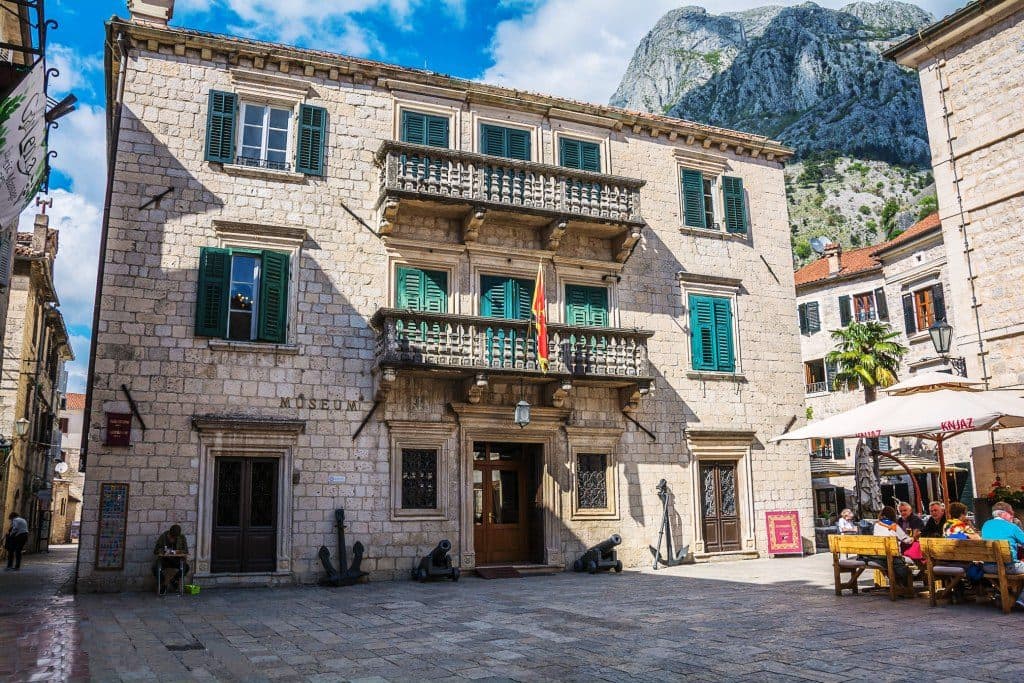
From the Maritime Museum in the Grgurina Palace to the Roman mosaics in Risan — Kotor and its surroundings preserve traces of the past that reveal centuries of maritime, cultural and artistic life on the Adriatic.
Kotor is a city of rich history and cultural heritage, so there are numerous museums and galleries that preserve important traces of the past. They depict the development of the city, the life of people through the centuries, as well as the rich artistic tradition of this area. That is why museums and galleries are an important part of Kotor's identity and significantly contribute to its tourist and cultural offer. Below you can get to know the most important museums and galleries in Kotor, as well as their significance and what is kept and displayed in them.
Maritime Museum of Montenegro - a story about the sea and life by the sea The Maritime Museum of Montenegro is located in the Old Town, in the Grgurina Palace. It is the most important museum in Kotor and one of the most important in all of Montenegro when it comes to maritime history. The museum houses a rich collection that shows the long connection between Kotor and the sea, and visitors can see old maps, ship models, weapons, uniforms, portraits of famous sailors and various objects from everyday life. It is especially interesting that the museum shows how the sea has shaped the lives of people in this area and how Kotor has been an important maritime and commercial center for centuries.
Gallery of Solidarity - art born from support and togetherness The Gallery of Solidarity is located in the Old Town, in the Pima Palace. It was created after the earthquake in 1979, when artists from the former Yugoslavia donated their works of art as a sign of help and support for Kotor. Today, this gallery houses a large number of works of art, paintings, graphics, drawings and sculptures. This collection is constantly available to visitors and is an important part of the cultural life of the city. Due to its history and content, the gallery is interesting because it combines art and a story of renewal and solidarity after a difficult period.
Lapidarium in the Church of St. Michael - stone traces of the past. The lapidarium is located in the Church of St. Michael in the Old Town. It is a collection of stone monuments and architectural fragments dating from different periods, from ancient to modern times. The exhibition includes reliefs, inscriptions, sculptures and parts of church and architectural decoration that show how Kotor has developed throughout its long history. This space is especially interesting because it preserves some of the oldest traces of life in the city and provides an insight into its development through the centuries.
Roman mosaics in Risan - the oldest traces of life in Boka As part of the cultural and museum activities of Kotor, there are also Roman mosaics in Risan. It is an archaeological site that dates back to the ancient period and is the remains of a Roman villa with preserved floor mosaics. This site shows that the area of the Bay of Kotor has been inhabited since Roman times. Visitors visit it because it offers a special insight into the oldest history of this area and the development of life in the ancient period.
Museum of the City of Perast - the maritime past of a small coastal town The Museum of the City of Perast is located in nearby Perast, but belongs to the museum institution of Kotor. It is located in an old palace and houses a rich collection of objects from the history of this coastal town. The museum houses portraits, weapons, documents and objects that testify to the maritime and commercial past of Perast. It is especially interesting because it shows the life of famous families and the importance of this small town in the history of the Bay of Kotor.
Small galleries and contemporary exhibition spaces - constantly new art in the city In addition to these institutions, there are also smaller galleries and exhibition spaces in Kotor that occasionally organize exhibitions of domestic and foreign artists. They contribute to the contemporary cultural life of the city and allow you to always see something new and different. Museums and galleries in Kotor show that this city is not only a historical and tourist destination, but also an important cultural center. They preserve the past, but also pass on cultural and artistic values to new generations, making Kotor a place where history and art naturally merge.