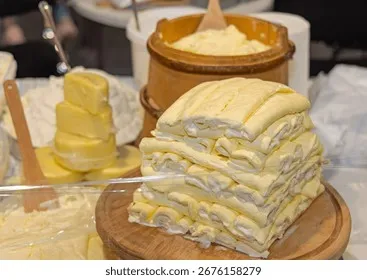
In traditional Montenegrin cuisine, there are foods that are not only seen as an addition to the meal, but as an indispensable part of the daily diet. Among them, a special place is occupied by cream and skorup - two dairy products that have been produced for generations in rural households and on mountain huts. Their rich taste, natural fullness and method of production make them one of the most recognizable symbols of Montenegrin gastronomy.
Their story begins with fresh milk that is carefully warmed up after milking and left to stand. A fat layer slowly forms on its surface, which housewives carefully collect and store. Over the years, it was from this simple procedure that the tradition of producing cream and custard was born, the skill of which was passed down from parents to children, often without written recipes, relying solely on experience and feeling. Although these two products are often mentioned together, there are differences between them. The cream has a softer texture, mild and creamy, with a fresh milky taste that goes easily with different dishes. The rind, on the other hand, is created by longer maturation and careful storage, which is why it develops a fuller, more pronounced taste and a firmer structure. It is this difference that makes them special, so many fans of traditional cuisine have their favorite. In the mountain katuns, where animal husbandry developed for centuries in harmony with nature, the production of cream and rind was part of everyday life. Fresh milk was not only seen as a drink, but as a valuable raw material from which products were created that could be stored for a long time. In this way, households created food stocks that were precious during the long mountain winters. Cream and crust have a special place on the Montenegrin table. They are often served for breakfast, with home-made bread, fritters or scones. They are an indispensable addition to kačamak and cicvara, where their rich taste complements the simple ingredients from which these dishes were created. Together with Njeguški prosciutto and homemade cheese, they form one of the most famous traditional appetizers that can be found in almost all parts of the country. Their value is not only in the taste, but also in the method of production, which requires patience and experience. The hosts know very well that the quality depends on fresh milk, the correct temperature and the time required for the product to ripen. That is why it is often said that the best cream and crust cannot be made with a quick recipe, but only with careful work and respect for the traditional procedure. Today, cream and skorup can be found in markets, in ethno-villages and restaurants throughout Montenegro. Although modern production brings new technologies, many households still cherish the old preparation methods, believing that the authentic taste can only be preserved if recipes that have survived through generations are followed. For many visitors to Montenegro, these dairy products are the first encounter with the wealth of local gastronomy. Their creamy taste and natural fullness show how simple foods can become special when they are made from quality milk and the diligent hands of the host. That's why cream and crust are not just additions to dishes. They represent a part of the way of life that shaped Montenegrin villages and towns, testify to the long tradition of animal husbandry and preserve the memory of a time when every food item was prepared with care and respect. It is for this reason that even today they remain an indispensable part of Montenegrin gastronomic heritage and one of the tastes that are remembered the longest after a visit to this country.