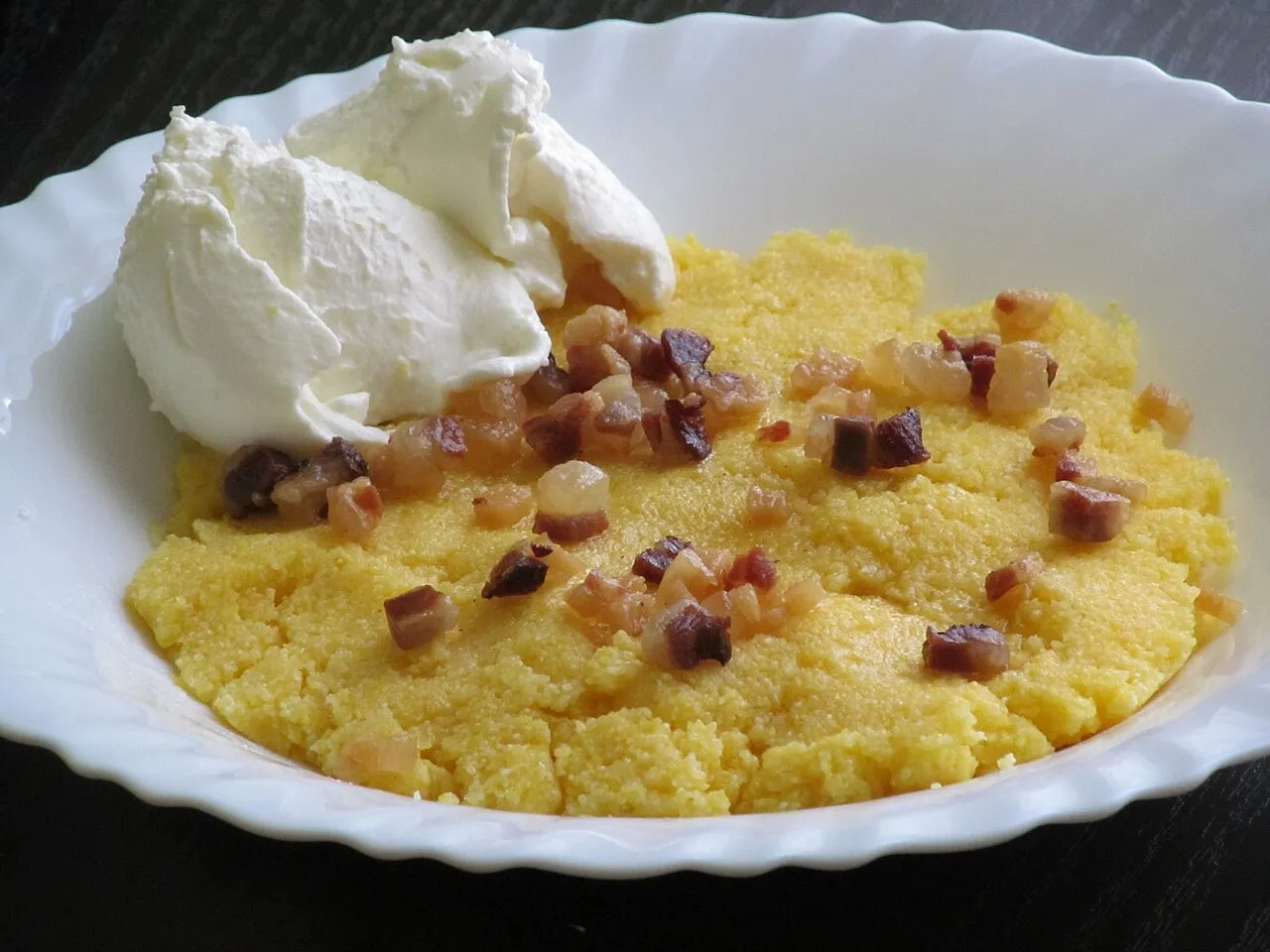
There are dishes that are remembered for their unusual spices or complex preparation, and there are also those whose value lies in their simplicity. Cicvara belongs to this second group. Created from a few basic foods that were once a part of every rural household, it has become a symbol of local cuisine, hospitality and life in the Montenegrin mountains.
Her story begins in katuns, where families stayed with their herds during the summer and made cheese, cream, butter and crusts from fresh milk every day. In such an environment, a dish was created that used the best quality dairy products and corn flour that the household had. From those few ingredients, a meal was created that was nutritious enough to provide energy for the whole day's work.
Unlike kačamak, where potatoes and corn flour play the main role, dairy products are in the foreground at cicvara. The preparation begins with the slow heating of homemade butter or cream, after which the cornmeal is gradually added with continuous mixing. When the mixture reaches the appropriate thickness, homemade cheese is added, which slowly melts and combines with the other ingredients, creating a recognizable creamy texture and rich taste.
Experienced hosts often say that a good cicvara does not depend on the recipe but on the quality of the ingredients and patience during preparation. It is necessary to constantly stir in order to combine all the ingredients into a smooth and uniform whole. This is precisely why it used to be said that cicvara is not cooked - it is carefully nurtured until it reaches its full flavor. Numerous variations of this dish can be found in different parts of Montenegro. Somewhere, more young cow's cheese is used, while in mountainous areas it is often prepared with sheep's cheese or rind, which gives it a more pronounced character. Some families add only one type of cheese, while others cherish recipes that combine several local dairy products. Despite these differences, the essence remains the same, cicvara is a dish that celebrates the richness of domestic milk and traditional production.
It is most often served warm, immediately after preparation. It goes well with homemade sour milk, yogurt or a glass of whey, and the table often includes homemade bread, prosciutto or dried meat. In many households, this kind of breakfast marked the beginning of the working day, especially during the agricultural work season. Even today, cicvara is an indispensable part of the offer of numerous ethno-villages, mountain households and restaurants that nurture traditional Montenegrin cuisine. Travelers who want to get to know the authentic flavors of the country often discover through this dish how simple foods, when prepared with care and experience, are enough to create an unforgettable gastronomic experience.
Tsicvara was not created to impress with its appearance, but to gather the family around the table and provide the warmth of home after a long day spent on the mountain. It is precisely because of this that it occupies a special place in Montenegrin gastronomy even today. It represents more than a recipe, it testifies to a way of life in which nature, work and community were inextricably linked, and every meal was an opportunity to share the best that the household has to offer.